sunnuntai 24. elokuuta 2014

Top 250: #71 - #80

Excitement rises as we move higher and higher up on the list. Masterwork follows masterwork. Without further introductions, let's get right to it.


80. A Smart Kid, by Porcupine Tree
(Stupid Dream, 1999)
Last time, we had no Porcupine Tree tracks listed; instead, three of the Steven Wilson side projects appeared. It is therefore high time that we rank a genuine PT song for a change. This one is particularly memorable to us. We actually somehow kind of missed A Smart Kid because it was "hidden" close to the end of the Porcupine Tree's 1999 album Stupid Dream. Later on, when attending the group's live performance in Helsinki, in December 2007, they played it and we didn't recognize it. After that incident, it has been played a lot and hence, it was able to secure a position in our all time top 80.


79. Skeletons at the Feast, by Spock's Beard
(Spock's Beard, 2006)
This instrumental track from Spock's Beard's ninth, self titled studio album represents to us a great example of how much fun true progressive rock can be. On this track, the group is exceptionally metal sounding but actually that fits its fast pace and complicatedness very well. There are some truly impressive guitar sequences as well as great drumming. Overall, this album is our number one favorite in Spock's Beard's catalogue, and this track is in its top three. Of those other two, All That's Left (#102) we already discussed, and the other one is a little further up, to be discussed in this very same blog entry.


78. A&E, by Goldfrapp
(Seventh Tree, 2008)
Oh, cool! A song on our list actually has an official video. It is so rare these days. Few other artists are anywhere as good in creating perfect pop songs as Goldfrapp. They have already appeared on the list twice, with Felt Mountain (#108) and Time Out from the World (#116). A&E is the most recent one of these. Released six years ago, it is a relatively simple but absolutely beautiful pop song that used to be one of our most played songs for a few months back then and is still doing very well on the list. Goldfrapp has released two more albums since, but their best recent tracks have not yet had time to climb this high.


77. This is the New Shit, by Marilyn Manson
(The Golden Age of Grotesque, 2003)
Another surprise entry, this industrial / extreme metal track from over a decade ago was also a big hit at the time here at ProgActive. What makes This is the New Shit so exhilarating is not only its extreme aggressiveness - although that does have something to do with it - but the delicious contrast between its verse and chorus. One sounds like almost any ordinary techno oriented track, and then the other almost literally explodes with furious riffs and Manson's strong vocals. The man has a perfect voice for a heavy metal singer.


76. Twilight Coda, by Steven Wilson
(Insurgentes, 2008)
Then comes a time to discuss Steven Wilson once again - but neither through Porcupine Tree's side project nor PT itself. Twilight Coda is the beautiful instrumental track that has been placed near the end of the first solo album SW made under his own name six years ago. It could be used to define the term atmospheric - as you can very well hear when playing the fan made video embedded above. This will not be the last we hear of Wilson or even Insurgentes the album - there will be another track of his only three places from here, albeit from a different album.


75. Satellite Anthem Icarus, by Boards of Canada
(The Campfire Headphase, 2005)
Another track from Boards of Canada's stunning peak album, Satellite Anthem Icarus is one more memorable instrumental that has played a little less at ProgActive during recent years, but was one of our major favorites around 2006 and 2007. Out on 17 October 2005, this third full length studio album by Scottish brothers Michael Sandison and Marcus Eoin remains one of last decade's essential music releases. It is certain to appear again further up on the list as two of our biggest favorites on it have not been ranked yet.


74. Shadow Memory / The Departure / Unraveling / Elevation, by Goldbug
(The Seven Dreams, 2010)
This combination of several tracks from Goldbug's masterful 2010 album The Seven Dreams is one of the most dumbfounding 11-minute musical sequences in recent memory. They were originally put together like this by an internet radio station; we didn't want to split the end result into individual tracks since they worked so well when played back to back in this particular order. Besides, there are a couple of other 11-minute tracks on the album as well, so this one feels like their companion piece. We have never been big fans of improvisation, but here it works wonders.


73. The Raven That Refused to Sing, by Steven Wilson
(The Raven That Refused to Sing (And Other Stories), 2013)
So, it is Steven Wilson again, and the greatest achievement of his musical career so far. This is how far up this song has managed to climb during the year and a half since we first heard it. We have already gushed about the song at length back then, but it might still be worthwhile to once again point out that this is one of the greatest achievements of mankind in the area of music during this decade. Do not miss it. Also, please do enjoy the wonderful animated video by Jess Cope, embedded above, to take in the entire experience.


72. Picture of Three Life, by Yasushi Yoshida
(Secret Figure, 2006)
There is no YouTube video or Spotify link for Japanese composer Yasushi Yoshida's masterpiece, but you can listen to it either on Grooveshark by clicking this link or go to Yoshida's home page where it can be streamed. Yoshida has already appeared on the list once, with Parade (For Closure, #149) and who knows, he might appear again further up. This absolutely beautiful instrumental is our favorite track on Yoshida's 2006 debut album. On his later releases, he has made more experimental music but  on this one he has excelled in simplicity, creating non-complicated yet memorable melodies.


71. The Slow Crash Landing Man, by Spock's Beard
(Spock's Beard, 2006)
Here is the other track from Spock's Beard's self titled 2006 album that we already referred to above. Very different from Skeletons at the Feast, this song proves that the group was at the time also able to write beautiful melodies that are not necessarily that complicated. We feel that this is the American prog group's high point, following which we think it is unlikely - although not impossible - that they will appear again on the list. Listening to this song, as well as other tracks from this album, it sounds like the group peaked right here.

lauantai 16. elokuuta 2014

Top 250: #81 - #90

Time to move further up on the list. There are already several masterpieces to discuss, even though we are still only between positions 81 and 90 - mind boggles when you think what lies further ahead.


90. One for the Show, by Echolyn
(As the World, 1995)
There is little to add here to what we already wrote earlier about that other Echolyn song Entry 11-19-93 (#121): it is an absolutely wonderful track that practically demands to be played in succession with the next song on the same album As the World, called One for the Show. Combined, these two make one hell of a ten-minute sequence for the listener. Shuffle plays must have somehow separated these two great songs on the list but here is the other one at last: every bit as good as the first one. Don't miss them.


89. Random Summer, by Múm
(Yesterday Was Dramatic - Today is OK, 2000)
The Icelandic group Múm has already appeared once on the list, with their wonderful Green Grass of Tunnel (#118). This second appearance of theirs looks likely to be the last: Random Summer is arguably the group's greatest masterpiece from their 2000 debut album. A wonderfully breezy, somehow airy instrumental, it marks one of those moments in music history that transcends all definitions and pre-defined genre limitations. We don't know what it is, but is is lovely. Like a colorful butterfly flapping its wings around us for a brief moment.


88. Hello, by Blackfield
(Blackfield, 2004)
For a short while in the mid-2000's, Blackfield was easily Steven Wilson's most successful side project outside Porcupine Tree. His talent, combined with that of Israeli singer-songwriter Aviv Geffen produced stunning results bordering between art rock and regular mellow pop. Hello was the first single taken from the duo's near perfect debut album, and was therefore also graced with an official music video, embedded above. Wilson and Geffen were major favorites of ours at the time of the introduction of the iPod, so it can be deemed an absolute certainty that there will be several other songs of theirs further up on the list.


87. Hyvinkää, by Sister Flo
(The Healer, 2007)
Now here is something that truly moving - for us, at least. One of the best Finnish pop / rock songs ever has been dedicated to ProgActive's home town of Hyvinkää. We found Sister Flo only about two or three years ago, but that has been enough to give this masterpiece of theirs a reasonably good ranking of #87 on the list. The band Sister Flo was actually from a neighboring town in the north, Riihimäki, about 15 kilometers away. They have however disbanded since the release of The Healer, their 2007 album that contains this beautiful song.


86. Drag Ropes, by Storm Corrosion
(Storm Corrosion, 2012)
Another side project by Steven Wilson, Storm Corrosion released their self titled debut album two years ago and immediately got our attention - in fact, we named Storm Corrosion's opening song Drag Ropes the best track of that year. Here's what we wrote back on New Year's Eve, 2012: "Anticipating a heavy prog metal album and then hearing this as its opening track was one of those all too infrequent moments that are the artistic equivalent of being hit on the head with a large wooden board." The musical masterpiece is complimented by Jess Cope's masterful video, embedded above.


85. Song for a Dead Friend, by Kevin Gilbert
(Thud, 1995)
Ah, this is the beauty of getting higher and higher up on the list. Every song is a masterpiece already. Song for a Dead Friend is one of the most beautiful sad songs ever written and recorded, and the reality of what happened makes it all the more heartbreaking. First, the American singer-songwriter composes this song in remembrance of his real life friend Danny. Then, in less than two years, he tragically dies himself. Knowing about these events of course affects the listening experience, but makes this song no less a masterpiece it is.


84. Crawl from the Wreckage, by Engineers
(Three Fact Fader, 2009)
At the time of this writing, Engineers' new album Always Returning has come out five days ago and sounds like a significant improvement over 2010's In Praise of More. Still, it is nowhere near matching the towering greatness of Three Fact Fader, filled with minor classics. Crawl from the Wreckage is one of them, and hardly the last on this list. It exemplifies all that is great about Engineers: an easy to remember, catchy melody combined with powerfully designed instrumentation.


83. Olisitko sittenkin halunnut palata, by Regina
(Katso maisemaa, 2005)
Already a second Finnish track in this group of ten, this one is a real anomaly on the list. We don't even know how it has come to remain this high up. But yes, this quirky pop song used to be a big favorite of ours in 2006 and there's no denying that we have some kind of a fetish when it comes to grown up women singing in a little girl's voice. Nothing to do with progressive rock, but very entertaining nonetheless. Regina has never recorded anything even remotely as good as this later on and we aren't sure if they are even active today.


82. Wonderland, by Frost*
(Experiments in Mass Appeal, 2008)
Wonderland is yet another song we have already covered back when listing the Top 20 Long Prog Masterpieces. Here is what we wrote about it back in June, 2012. It reached #18 there, and also has a pretty good position on this list. The song itself is a schizophrenic one: its first part is a hard rocking Frost* song which is then followed by the "hidden" second part that completes the track as well as the entire album Experiments in Mass Appeal with calmness and exceptional beauty, ending in an extremely slow, unforgettable fade out.


81. Soft Shoulders, by No-Man
(Flowermouth, 1994)
Already the third side project of Steven Wilson in this group of ten alone (!) No-Man is the oldest one of them all and was in fact active as a real group even before Porcupine Tree. The lovely Soft Shoulders is located somewhere between art rock and pop, very much like Hello discussed above. Flowermouth was released at a point when the violinist Ben Coleman had left the group that had only two remaining members: Wilson and singer Tim Bowness. Following this release, No-Man would take a sharp turn from pop to genuine art rock, and has continued as a duo to this day.

lauantai 2. elokuuta 2014

Top 250: #91 - #100

Finally, we are entering the top 100. Tracks that have made it this high up on the list must have exceptional qualities. Let's change the format a bit. From now on, whenever possible, there will be a link to the track itself, and also we will display all related album covers from now on. This may look a bit silly on most times since there will be no difference between the two, but will be very useful when there is one.


100. Beside You in Time, by Nine Inch Nails
(With Teeth, 2005)
The 2005 album by Nine Inch Nails was not met with high praise, and even we at ProgActive felt it was far from their best work. Yet there are some individual nice tunes on it and one of them we found close to the end. Beside You in Time shows some of Trent Reznor's best songwriting and also its relatively low key first half gives the listener an enjoyable feeling of anticipation: an explosion is sure to come before the end. When it does arrive, there will be plenty of goosebumps.


99. Woven Tears, by This Will Destroy You
(Moving on the Edges of Things, 2010)
The Texan post rock group This Will Destroy You has reached a surprisingly high position on the list considering we found them only two or three years ago. This track, taken from their 2010 EP Moving on the Edges of Things, sounds very much like industrial rock - not metal, but the instrumental track is still more involved in sound effects than actual composition. The plentiful drumming gives it a nice, ominous atmosphere.


98. Forever is a Lonely Thought, by Kayak
(See See the Sun, 1973)
This lovely song marks the first appearance of Dutch symphonic progressive rock group Kayak on our list. It used to be our big favorite around 2005 when we originally found the band. Now it doesn't get played much any more, but anyway this relatively recent introduction resulted in a place in the top 100. Forever is a Lonely Thought is a melodic continental prog song from over 40 years ago. Another recommendable song from the same album is called Lovely Luna.


97. In This Twilight, by Nine Inch Nails
(Year Zero, 2007)
Another NIN track in a short space is from the next album following With Teeth that we liked even less than its predecessor. Yet Year Zero has paradoxically appeared on the list already twice: Hyperpower! (#186) and Survivalism (#162) were both listed. Even a fourth appearance seems likely, and it should actually take place quite soon. In This Twilight is another quieter NIN song, with a pessimistic world view and hence, extremely cynical lyrics.


96. The Great Satan, by Ministry
(Rio Grande Blood, 2006)
This brilliant heavy metal track was at one point so popular with us that it featured in the playlist of top 25 most played tracks that iTunes collects and keeps up to date automatically. And this was not a short visit there, either - The Great Satan must have spent over a year there. It doesn't get played a lot any more, but is definitely an exhilarating piece of heavy rock with a heavy message. At this point in their career, virtually all Ministry songs had the same message.


95. Mei, by Echolyn
(Mei, 2002)
This masterpiece is currently also in YouTube but will probably be removed soon because the song comprises an entire album, so we'll link to Spotify this time. As you can see above, the song runs almost 50 minutes, so it seems like a minor miracle that it has been able to climb to the top 100 - and yet it has. We have taken the required time to listen to it over and over again. Echolyn has already appeared on the list a few times and is very likely to appear again further up on it.


94. The Show of Our Lives, by Caravan
(Cunning Stunts, 1975)
Many seem to think that Cunning Stunts was only an afterthought following a great career that culminated much earlier, at the beginning of the seventies. We here at ProgActive beg to differ. Not only was this album truly great, but its opening track The Show of Our Lives the single best thing the Canterbury proggers were ever able to achieve. Impeccably arranged and played, it represents absolute perfection in symphonic prog leaning towards more easily accessible art rock.


93. Snowman, by Frost*
(Milliontown, 2006)
One more entry from the debut album of British proggers Frost*, Snowman is their least aggressive song on that album, aggressiveness in this case being of course a positive thing. It sounds about as good as the other songs and was easy to like but admittedly hasn't played very much in recent years. As great as Frost* is, Snowman seems slightly oversimple and obvious among their other works. Easy to like, sure, but also perhaps a bit too easy to forget.


92. Epochs in Dmaj, by Caspian
(Tertia, 2009)
Here is another American post rock group whose most melody driven track got us excited five years ago. Unlike This Will Destroy You, they do not employ percussion but instead rely on a beautiful melody played using keyboards and guitar as solo instruments. Tertia is the second studio album of the Massachusetts based band. Since then, there has been a third one as well as a few EP length releases.


91. The Beginning of the End, by Nine Inch Nails
(Year Zero, 2007)
Here is Nine Inch Nails completing their hat trick with the third pick from Year Zero that we already referred to; perhaps our favorite track on the album. We have a couple of other favorites on this final NIN major label release, but it seem unlikely that they would appear further up on the list. However, running into other tracks from other NIN albums seems almost a certainty; the group has been one of our favorites during recent years.

perjantai 1. elokuuta 2014

1992: January to July

On 13 January 1992, American singer-songwriter Tori Amos released her debut album Little Earthquakes and immediately got my attention. She was not a newcomer to music, having begun her singing career already in 1980 but not as a solo performer. Apparently she had worked on her own material for some time since the debut felt surprisingly accomplished and contained numerous excellent tracks. Let's embed one of them below.


The lovely song above is called Winter, but we could have just as well chosen Girl, Silent All These Years, Precious Things, China or Leather which goes to show how evenly great songs there are on Little Earthquakes. I suppose Tori Amos appeals to the same kind of sensibilities that Suzanne Vega does. This was the beginning of an interesting career that spawned several other noteworthy music releases that we will be getting back to in due time.

The new album by Public Image Ltd. came out on 10 February in the U.S. and precisely two weeks later in the UK. It was called That What is Not and would be the last PIL album to come out in 20 years. Overall, I wasn't completely convinced, but there were nonetheless two standout tracks that must be mentioned. The first one of them was the album opener Acid Drops which was not only a great rock song but also memorable because of its ingenious sampling of Anarchy in the UK. The other standout track is embedded below.


Cruel was always my favorite song that I associate with this time and the point in PIL's career. At the time, I had no access to satellite channels or MTV but there was a regular program in Finnish television that played new music videos occasionally, so I was familiarized with the song and its official video almost as soon as it was released. Great, fun song in much the same way as Disappointed. And with this, it is goodbye to PIL, unless I hear their 2012 reunion album at some point and it turns out to contain something really good.

Between the US and UK releases of That What is Not, Shakespears Sister released their second album Hormonally Yours on 18 February. Last time, we discussed their debut because it contained one of the most perfect pop songs of the late eighties in Run Silent, Run Deep (1989). This time, there were two excellent pop songs on the album, although neither one of them was quite that perfect. Of them, Stay got way more MTV play, so let's go against the flow and embed the other one below.


Hello is the beautiful closing track of the album. Although at the time I preferred Stay, over time I have come to like Hello more. Both are excellent pop songs from the early nineties. And there is an interesting connection to PIL: not only do both of these new albums contain only two really great tracks, but also they precede a long recording hiatus. Like I already wrote, PIL did not release another album in 20 years; Shakespears Sister paused for 13 years. Their third album didn't come out until 2005.

The next important date for us is in June, so let's use this empty period of nearly four months for discussing two albums with unknown release dates. First of them is a really interesting modern classical album, an EP called Music for 3 Pianos, by Harold Budd, Ruben Garcia and Daniel Lentz. Their piano instrumentals are mesmerizing. The album was recorded within a single day, 2 March, and was probably relatively easy to post produce so it might have been in the stores before summer. Here is perhaps the best track on the EP, Somos Tres.


The other new album with an unknown release date is more important when one considers the development of progressive rock. We already briefly mentioned the American group Echolyn who debuted with their self titled album in 1991. Now, they released their sophomore effort Suffocating the Bloom, sounding much like Gentle Giant and paving the way for progressive rock's glorious return a little later on. It probably isn't that hard to imagine the excitement among prog fans of the time.

Suffocating the Bloom contains an amazing 21 tracks, although the last eleven are presented under a common title A Suite for the Everyman. The creativity on display as well as the diversity of the music itself never fails to impress. Embedded below is the album's single longest track Memoirs from Between for maximum enjoyment but there would have been a number of other excellent tracks to choose from. In particular, A Little Nonsense is a well known example where the group sounds exactly like Gentle Giant.


The next important date in our 1992 calendar is 8 June which marked the release of not only Album of the year but also Album of the decade. Yes, the best album of the nineties came out this early! There is nothing more to wait for, best to concentrate on waiting for 2002, when the best album of the 00's will come out... No, just kidding. Even though the race for the very best of the nineties is now over, there will be plenty of excellent music to check out still. There will be a separate entry for this one, so we can move on for now.

You see, another album worth mentioning came out on the same date. It was the new release by the American heavy metal group W.A.S.P. - not to be confused with the best album of the decade! Yet there is one simply brilliant track on The Crimson Idol, called The Idol which displays an obvious desire by the band to evolve into something more than just an average heavy metal group with aggressive live performances and slightly ridiculous appearances.


Next, we move on to 7 July, which is when Dream Theater released their second album Images and Words. This release marks a big step ahead for the future prog giants and it is well liked among their fans as well. While I will admit that the album is a definite improvement over the first one and contains several good tracks, I find nothing important enough on it to be worth embedding here, so I suppose we will simply note the album's release and move on.

In this case, we only need to move forward one week. On 14 July, the American industrial metal group Ministry released one of their key albums, the aggressive Psalm 69 that contains many of the key metal tracks of the era. Or, to be more precise, the album is filled with them. Many of them carry a weighty message but my favorite is just a fun metal track that I will embed below and close this blog entry on a high note. Please enjoy Jesus Built My Hot Rod!

perjantai 25. heinäkuuta 2014

Top 250: #101 - #120

120. Wedding Nails, by Porcupine Tree
(In Absentia, 2002)
Like .3 that started our previous blog entry, Wedding Nails is also another somehow ominous instrumental track from Porcupine Tree's 2002 masterpiece In Absentia. It perfectly exemplifies the harder rocking sound that the group introduced on that album: guitars and drums are aggressively brought to the front of the soundscape, creating an excellent progressive rock track.

119. Two Against Nature, by Steely Dan
(Two Against Nature, 2000)
After releasing Gaucho in 1980, Steely Dan seemed to have nowhere to go. Perfect sonic sterility they had looked for had been achieved. The next album didn't come out until a full 20 years later. The title track of Two Against Nature is simply irresistible with is complicated drum pattern and enjoyable, self referential lyrics. Nothing to do with progressive rock but excellent musicianship of another kind.


118. Green Grass of Tunnel, by Múm
(Finally We Are No One, 2002)
A third consecutive track from the same period in time, Green Grass of Tunnel was at one point one of our favorites and probably in the top 30 then. The Icelandic group has a childlike approach to both their album covers and music itself. Many of their compositions are instrumental but this one is an exception: a song with actual lyrics that would however work as well without them.

117. B.Y.O.B, by System of a Down
(Mezmerize, 2005)
The next track couldn't possibly be more different than B.Y.O.B. is from the naive and simple sounding songs of Múm. The hard rocking Armenian Americans System of a Down really know how to combine extreme metal riffs with melody driven passages. In this song from their 2005 album they truly outdo themselves. Shame, then, that there would be only one more album from the group before their inevitable disbanding.

116. Time Out from the World, by Goldfrapp
(Supernature, 2005)
The British duo Goldfrapp appears on our list for the first time. In essence, they are a pop group leaning towards electronica, but particularly on their later albums they have proved to be much more ambitious than most. Time Out from the World appears on their third album; they have released another three since. It is an exceptionally beautiful pop song that never fails to move us.

115. Three Fact Fader, by Engineers
(Three Fact Fader, 2009)
So, here we have already the sixth consecutive 2000's song release. The title track of Engineers' excellent second full length studio album has reached a surprisingly high position on the list, considering it isn't really in our top three from that album, let alone from the group's entire output. Yet it is a perfectly fine art rock / pop track and a good way to introduce newcomers to their sound and style.


114. Underneath the Waves, by Strapping Young Lad
(City, 1997)
So here it is, then: the greatest metal track that we know of. If you know of one that is greater, you are welcome to let us know. On the album City, Underneath the Waves immediately follows AAA that we already discussed (#146). Played back to back, these two deliver one hell of a ten minute nirvana of extreme metal. And to think we found these tracks only about a year ago, yet they have already climbed this high!

113. Remember Us, by The Pineapple Thief
(Variations on a Dream, 2003)
At approximately 16 minutes, Remember Us is one of The Pineapple Thief's longer creations. It closes their 2003 album Variations on a Dream and is to our understanding dedicated to the victims of 9/11. It is an exceptionally downbeat and mournful song in the group's catalogue, but there is something grand about the way its sadness is combined to magnificent beauty.

112. Trains, by Porcupine Tree
(In Absentia, 2002)
In Absentia seems to have become a regular visitor on our list. So far, we have had Heart Attack in a Lay by (#201), .3 (#140), Wedding Nails (#120) and now this. While this may seem a bit repetitive, we need to point out that the album is a towering achievement in not only 2000's releases but progressive rock in general. Trains is a lovely song with no hard rock or metal riffs that are otherwise frequent on In Absentia.

111. Main Title from Quake, by Nine Inch Nails
(Quake, 1996)
Quake is not an album but a well known first person shoot-'em-up video game from id Software; their more realistic looking follow up to the classic Doom games. Guess who composed the music for the game? Fresh off the classic The Downward Spiral (1994), Nine Inch Nails composed a soundtrack that mostly belongs to the dark ambient genre. The opening track however has some industrial NIN aggressiveness to it.


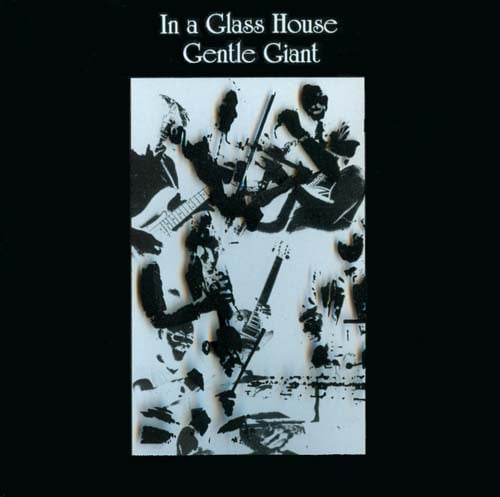
110. An Inmate's Lullaby, by Gentle Giant
(In a Glass House, 1973)
This surprising appearance of progressive rock cult band Gentle Giant this far high on the list is explained by the fact that we at ProgActive never owned the vinyl version of the album In a Glass House and the CD took a really long time becoming available. When it was released we purchased it and this beautiful ballad is our favorite song on it. Hence, it got a lot of playtime after April, 2006.

109. Meridian Moorland, by Peter Baumann
(Trans Harmonic Nights, 1979)
The German electronic music composer Peter Baumann was a member of Tangerine Dream during that group's golden era. Following his departure in 1977, he released his second solo album Trans Harmonic Nights which contains this masterpiece and also some other really good compositions. In this instrumental work, Baumann expertly creates an ominous atmosphere using only electronic instrumentation.

108. Felt Mountain, by Goldfrapp
(Felt Mountain, 2000)
The title track of Goldfrapp's debut album is what initially made us interested in the British duo we already mentioned only eight places further down (#116). Felt Mountain is a mostly instrumental track with some synthesized vocal work by singer Alison Goldfrapp, like the rest of the album. We think it can be called a modern art pop masterpiece. The duo is likely to appear again further up on the list.

107. Inner Silence, by Anathema
(Hindsight, 2008)
This beautiful song is a new version of the original one, created specifically for the 2008 album Hindsight. There, the group re-recorded their earlier songs as new, in many cases more mellow versions. In this case, the original track that had been released a decade earlier was not that much different but anyway, it is the new version that we have played over and over again.


106. I Drew a Final Breath in the Dream, by Maju
(Maju-2, 2000)
Maju is a Japanese electronic music group from Tokyo. They have stated that their mission is to use music for describing what it is like to live there. They have named their albums very simply: Maju-1, Maju-2, Maju-3, etc. This second album of theirs came out in 2000 and contains several excellent compositions. Maju is guaranteed to reappear in the top 100, probably quite far up.

105. The Sky Moves Sideways, Phase 1, by Porcupine Tree
(The Sky Moves Sideways, 1995)
Essentially still a solo work by Steven Wilson, the long opening track of Porcupine Tree's 1995 album The Sky Moves Sideways always marked the point where PT started seeming destined for greatness. The previous albums had been interesting, sure, but it wasn't until we heard Phase 1 that we were convinced that Wilson was taking progressive rock seriously and was going to be a major player in that field. Of course, that was exactly what he became.

104. She Reminds Me of You, by Trent Reznor & Atticus Ross
(The Girl With the Dragon Tattoo, 2011)
This recent instrumental from a major Hollywood film has received a surprisingly high position on the list. Following their Oscar win for The Social Network (2010), Trent Reznor and Atticus Ross had really no chance to repeat that feat, and true enough: the soundtrack to The Girl With the Dragon Tattoo hardly matches its brilliant predecessor. But it does have its great moments, and this is one of them.

103. Collapse the Light into Earth, by Porcupine Tree
(In Absentia, 2002)
So we are back to In Absentia; for the third time in this blog entry, and for the fourth overall. This stunningly beautiful song is its closing track: one of the greatest musical achievements of the entire decade. There are probably a couple of more tracks from this album in the top 100, but other than that, the album suffers from coming out a bit too early in relation with our start date of April, 2006.


102. All That's Left, by Spock's Beard
(Spock's Beard, 2006)
Finally, two more relatively recent entries will complete this blog entry. We already had one track from Spock's Beard's self titled 2006 album on the list: Stream of Unconsciousness (#131). This one is a non-progressive, beautiful song about lost love that we couldn't help but love back when the album came out. We would anticipate at least one, or perhaps two additional entries from this album in the top 100.

101. Kingdom, by Dave Gahan
(Hourglass, 2007)
Depeche Mode singer Dave Gahan released his second solo album Hourglass in October 2007, and it still remains his most recent one. He proved to have overtaken DM when it came to songwriting quality. Kingdom is catchy as hell, and also benefits from high production values especially when it comes to percussion sound. The drum beat is simply irresistible and the song itself one of the greatest pop tracks of 2007.

maanantai 14. heinäkuuta 2014

Top 250: #121 - #140


140. .3, by Porcupine Tree
(In Absentia, 2002)
Porcupine Tree's towering masterwork In Absentia is our number one favorite in their discography, so it comes as no surprise that there are several tracks taken from it in not only Top 250 but in fact Top 140. .3 is a powerful instrumental track, almost as if hidden somewhere in the middle of the album. No reason - when all material on an album is this strong, there is really nothing to hide.

139. Lightdark, by Nosound
(Lightdark, 2008)
This is already the third track on the list from Italian Giancarlo Erra's Nosound, following Constant Contrast (#211) from their later release, and Someone Starts to Fade Away (#210) from this very same 2008 album. This title track might be our favorite on it. An absolutely beautiful melody backed up by a nicely echoing piano. Atmospheric and unforgettable.

138. Stinkfist, by Tool
(Ænima, 1996)
Following Schism (#225), Vicarious (#198) and The Grudge (#167), this is already the fourth and almost certainly final appearance on the list by American progressive metal artists Tool. Frankly, it comes as a surprise to us that the opening track of their second studio album, already 18 years old, ended up higher on the list than the newer, more polished ones. There is some raw power at play here.

137. La Mer recommencée, by Vangelis
(L'Apocalypse des Animaux, 1973)
This is an early masterpiece from Greek electronic music wizard Vangelis, from the time when he lived in Paris, composed music for films, and named his compositions in French. L'Apocalypse des Animaux was his breakthrough album that even led to discussions on whether he should join progressive rock supergroup Yes following the departure of their keyboard player Rick Wakeman.


136. Light Mass Prayers, by Porcupine Tree
(Signify, 1996)
Here comes another Porcupine Tree track. Light Mass Prayers seems to be little more than a short interlude between two actual tracks on the album Signify, but somehow we always connected to it more strongly than we did to those other two. We have mentioned the word "atmospheric" a few times already; here is a composition you could use to define the term. It is a perfect example of how music can take you to another place by power of suggestion alone.

135. Resurrect Dead on Planet Jupiter / Last Dream Before Dawn, by American Hollow
(Screaming into the Void, 2012)
This is actually a combination of the first two tracks on American Hollow's second album, out only two years ago. Resurrect is only a short introduction, Last Dream is the actual song that brings Blackfield to mind. American Hollow started as a progressive metal group on their debut; here, they have replaced metal with rock, and also with some really gentle elements exemplified by Last Dream.

134. Come in out of the Rain, by Engineers
(Folly, 2004)
At the beginning of their career a full decade ago, British shoegazers Engineers displayed some exceptionally strong songwriting skills. This track is a particularly good example of that. It will be interesting to see if their new album Always Returning, due out next month, will be anywhere near this level. Come in out of the Rain was also included on the group's self titled debut album (2005) but its first publication was on the EP Folly, out the previous year.

133. Earth Day, by Devin Townsend
(Terria, 2001)
Ever since we discovered Devin Townsend, this song has been a major favorite for us, so here we are, for a change actually wondering why it hasn't climbed any higher on the list than this. A great, great progressive metal anthem from the album that was Townsend's salute to his home country Canada. It is over eight minutes long but packs more punch than most other albums in their entirety.


132. Interlink, by Tetsu Inoue
(World Receiver, 1996)
Another Japanese composer in the Top 250 besides Yasushi Yoshida is Tetsu Inoue, whose 1996 album World Receiver contains the delightful track Interlink. We suppose it really belongs to the ambient music genre, but what causes this approximately ten-minute long composition to stand out in that context is the skillful use of sound effects as well as its exceptionally good natured overall feel.

131. Stream of Unconsciousness, by Spock's Beard
(Spock's Beard, 2006)
In spite of being self titled, this album is actually already the ninth effort by American prog rockers Spock's Beard - and since then, they have released another two. Stream of Unconsciousness is an instrumental closing section of a 17-minute long combination of four separately named tracks. Since these were marked with different track numbers, it received a rank of its own on the list. Easily the best section of the whole, it is an irresistibly fun and energetic prog track.

130. All Sweet Things, by No-Man
(Schoolyard Ghosts, 2008)
Following Pigeon Drummer (#219), Close Your Eyes (#185) and Truenorth (#161), this is already the fourth appearance of No-Man on the list. This beautiful song opens the dynamic duo's latest album and is admittedly a very lovely thing to listen to but one that lacks the strong dynamic of a Pigeon Drummer. This is the third and probably last pick from Schoolyard Ghosts, but not the last we'll hear of No-Man.

129. Ibby it is, by Happy the Man
(Crafty Hands, 1978)
One of the greatest symphonic progressive rock instrumentals of the seventies, Ibby it is reached a surprisingly poor rank on the list, but this is of course explained by us listening to it a lot of times before introduction of iTunes in April 2006. The track from American prog group Happy the Man's second studio album is arguably the unsurpassed highlight of their entire recorded output.


128. Darkness, by Lamb
(Between Darkness and Wonder, 2003)
Lamb is not progressive rock, but we would be hard pressed to define what it is. Difficult to label, the stunningly beautiful opening track Darkness from their 2003 album Between Darkness and Wonder is nowhere near as dark as its title might suggest. The music is really only a cocoon from which the existential lyrics emerge. The listener can respond with nothing but sheer awe.

127. The Man With the 4.7, by Jem Godfrey
(Music in the Typewriting Room, 2001)
Yes, there never really was an album called Music in the Typewriting Room, but the Frost* frontman Jem Godfrey used to have a collection of experimental tracks from this particular era available for download on this web site, using that as a header, so we will reuse it. This humorous track has played enough times to reach a respectable chart position. We suspect the "title track" will be also on the list, higher up. Fun fusion of pop and prog, with great production values.

126. Wind Won't Howl, by OSI
(Fire Make Thunder, 2012)
Following the older track Once (#223), this is the second appearance of American progressive metal group OSI on the list. Fire Make Thunder is the band's fourth studio album and latest release, out a couple of years ago. Wind Won't Howl is not a particularly metallic song but more of a low key effort with well written melody. Original Dream Theater keyboardist Kevin Moore knows his craft very, very well.

125. Island, by Echolyn
(Echolyn, 2012)
Another American progressive rock group Echolyn has a somewhat different style compared to OSI. Their latest release is also from 2012, and is already their second self titled album, following 1991's debut. Island is its absolutely stunning opener that runs over 16 minutes and already proves that the group is still in great form, after all these years. We cannot wait for their next album release and can only hope that one is forthcoming.


124. Thrombosis Sonata, by Donny Who Loved Bowling
(Headstone, 2013)
The third recent release from an American group in a row on the list is perhaps the most challenging one. Donny Who Loved Bowling is an experimental music outfit with only two members. This is by far our favorite track on their most recent release Headstone: an atmospheric (again) instrumental that is very reminiscent of the early works of film composer Howard Shore. This composition would be right at home on the soundtrack of Videodrome (1983).

123. Futile Devices, by Sufjan Stevens
(The Age of Adz, 2010)
Yet another relatively recent American release, but not from a progressive rock group. Singer-songwriter Sufjan Stevens already appeared once on the list with his best known song Chicago (#150). This beautiful song made it higher up on the list probably only because of its more recent release and therefore higher chance of being played via our iTunes collection. The song opens the album and runs only two minutes and eleven seconds.

122. Something to Believe in, by The Bangles
(Everything, 1988)
OK, so we still have an occasional pop song on the list here and there. In this case, it is hardly any wonder. Yet one American group or artist - this is already the fifth one in a row - released one of their best loved albums called Everything in 1988. There were other songs on it that gained more popularity but this pretty song has always been our number one favorite. Hence, it made it to the upper half of Top 250.

121. Entry 11-19-93, by Echolyn
(As the World, 1995)
And here is the sixth subsequent American release. We had to check: it will end here, #120 that opens the next blog entry is a song from a British artist for a change. Entry 11-19-93 is a wonderful track that practically demands to be played in succession with the next one on As the World, called One for the Show. Combined, these two make one hell of a ten-minute sequence for the listener. Shuffle plays must have separated these great songs on the list but we are sure that One for the Show will shortly follow. Do not miss either one!

lauantai 12. heinäkuuta 2014

Top 250: #141 - #160


160. Lydia, by Paradise Lost
(One Second, 1997)
Here is yet another song that we have already discussed in another blog entry. Almost precisely two years ago, there was a short piece about this exceptional track that you can check out right here. The earlier output of Paradise Lost was much more doom laden, so One Second probably came as a small shock to the British group's original fans. Lydia's complicatedness certainly piqued our interest at the time.

159. Reaching Land, by Patrick O'Hearn
(Transitions, 2011)
Patrick O'Hearn, who we originally got to know from Frank Zappa's band in the late seventies, has been making solo albums for some three decades, and they have little to do with Zappa or his style. O'Hearn's albums might best be categorized as new age, but stand out in that genre thanks to their strong compositional approach. The opening track from the 2011 album Transitions is a perfect example.

158. Rikki Don't Lose That Number, by Steely Dan
(Pretzel Logic, 1974)
The American duo Steely Dan has absolutely nothing to do with progressive rock, which is virtually the only reason we grew to appreciate their body of work only less than five years ago. Heard at a young age, Aja (1977) offered nothing to a prog enthusiast. Heard in middle age, it is a different thing altogether. The seminal opener of Pretzel Logic (1974) has played a lot since its inclusion in our collection.

157. Atonement, by Opeth
(Ghost Reveries, 2005)
Ghost Reveries was our first introduction to the Swedish progressive metal group Opeth. On that album, they mostly resided at the metal end of their musical spectrum but have become more of a progressive rock group since. Atonement has some beautiful passages as well as heavier ones. In particular, we enjoy its opening sequence.


156. Mushroom, by Can
(Tago Mago, 1971)
Apparently we haven't always played Can's Mushroom and Oh Yeah (#178) back to back, even though they are placed that way on Tago Mago, arguably the group's first true masterpiece. Therefore, the more controlled Mushroom is 22 places higher up on the list than its zanier counterpart. Damo Suzuki's singing gets aggressive now and then but otherwise, this is a relatively restrained effort, albeit with noticeable underlying tension.

155. Animate, by Rush
(Counterparts, 1993)
Following 1991's Roll the Bones, Rush released Counterparts which to me sounded like a step back into the right direction. Soundscape was still extremely polished, but there is a difference between sounding sterile and sounding accomplished. The opening track Animate is a killer rock song that immediately hooks you and never lets go. Pay particular attention to how Alex Lifeson's guitars sustain the song's momentum all the way to the end.

154. Strutton Ground, by Steve Hackett
(To Watch the Storms, 2003)
Shamefully, we must admit that we forgot about Steve Hackett some time in the mid-eighties, thinking he had run out of ideas and would have little more to offer. To have been so wrong is embarrassing. But it was for this reason that we discovered this gem, as well as the excellent album To Watch the Storms only a few years after it had come out. In addition to this outstanding opening track, don't miss Circus of Becoming, This World or Serpentine Song.

153. The Other Me, by Frost*
(Milliontown, 2006)
It is somehow oddly fitting that we at ProgActive consider The Other Me the weakest track on the masterpiece that is Milliontown, the debut album of British prog rockers Frost*. Since it still almost made it to our top 150, it must mean that the remaining five tracks have also ranked on the list. We haven't checked - in fact, haven't even looked at the list after its first formation on 6 June - but think it's likely.


152. Videotape, by Radiohead
(In Rainbows, 2007)
For some reason, many of the tracks listed here are either opening or closing tracks of their respective albums. Videotape belongs to the latter category: it closes Radiohead's self financed 2007 album In Rainbows. We think it wasn't a particularly successful effort overall, but contains two or three good songs, the best one of which is this one. A restrained, low key track with Thom Yorke and a piano.

151. Polygon Window (Dirty Motel Mix), by Aphex Twin
(1992 - 1993?)
Herein lies a mystery. Polygon Window is the opening track of Surfing on Sine Waves (1992), the debut album of Polygon Window aka Richard D. James, later better known as Aphex Twin. It is a decent electronic music instrumental that wouldn't however have made it to the list. The track that did is a later variation called Dirty Motel Mix, which we are unsure of 1) if it has ever been included on an album, 2) if it was completed in the same year of the next, 3) or even how it ended up in our iTunes collection. A magnificent remix, in any case.

150. Chicago, by Sufjan Stevens
(Illinoise, 2005)
Nothing to do with progressive rock but everything to do with high quality singer-songwriting, Sufjan Stevens' Chicago came to our attention back when we first saw the trailer for the film Little Miss Sunshine. As a piece of melody driven art rock, it is just about perfect. Its discovery resulted in an explosion of other Sufjan Stevens songs to our collection, although it is doubtful there will be others higher up on the list.

149. Parade (For Closure), by Yasushi Yoshida
(Secret Figure, 2006)
The Japanese composer Yasushi Yoshida's stunning debut album Secret Figure still remains his best. ProgActive was extremely lucky to stumble upon it only a couple of years after its release. Yoshida's peaceful music is all instrumental and relies heavily on the use of piano and strings. And since this particular track is not even our number one favorite, it seems very likely that we will run into Yoshida again further up on the list.


148. Latericius Valete, by Pain of Salvation
(Be, 2004)
Latericius Valete is already our second pick from the album Be by Pain of Salvation, so it must really have made an impression on us at some point - since we can't remember the last time we have actually listened to it. At two minutes and 28 seconds, this one is a relatively short, mainly instrumental track that employs acoustic guitar and piano as its lead instruments, except for its more rocking conclusion.

147. Grasshopper, by Man
(Slow Motion, 1974)
On their ninth album, Welsh art / progressive rock group Man created their great masterpiece: Grasshopper, one of the most moving love songs of the era. In addition to the well written melody, this song stands out because of the way its lyrics successfully tell a convincing story that feels like it's something that actually happened. Who knows, maybe it did. Classic track from a great age in music.

146. AAA, by Strapping Young Lad
(City, 1997)
Even though we at ProgActive discovered Strapping Young Lad only about a year ago, AAA has managed to climb this high on the list. This should give us some serious anticipation about the location of the next track on the same album, our all time favorite metal track. The Canadian extreme metal group led by Devin Townsend has disbanded several years ago, but their masterpieces live on and still keep bringing goosebumps to those who appreciate them.

145. Disco Suicide, by Brand X
(Moroccan Roll, 1977)
The jazz rock group - with strong emphasis on jazz - Brand X is of course known because of the involvement of Genesis drummer Phil Collins, who plays also on this particular track. Most of the group's output has been, well, a bit too jazzy for ProgActive's taste. But here is the brilliant exception: an instrumental that manages to fuse progressive rock with jazz in a way that probably satisfies fans of both genres.


144. Lake Constance, by Mike Oldfield
(The Millennium Bell, 1999)
This is the other excellent instrumental track from Mike Oldfield's The Millennium Bell that we hinted at when discussing Broad Sunlit Uplands (#183). When trying to remake his megahit Tubular Bells, Oldfield has usually failed but in this case there were a couple of successes as well. This is thanks to noticeable inspiration while composing the track: not too derivative from the original classic, yet immensely beautiful.

143. God If I Saw Her Now, by Anthony Phillips
(The Geese & the Ghost, 1977)
Another track from an album we have already mentioned, God If I Saw Her Now is a companion piece to Which Way the Wind Blows (#250). And yes, it is once again Phil Collins, drummer of Brand X, who sings on this track. Like we have already mentioned a couple of times, we are suckers for songs that tell believable stories and here is one - it sounds like something the songwriter might actually have experienced in his life.

142. Try Some, Buy Some, by David Bowie
(Reality, 2003)
On what was David Bowie's last album before a decade's hiatus, there were only a couple of tracks that fully satisfied ProgActive, this one being the most interesting one. An art rock song with some symphonic prog influences, Try Some, Buy Some is one of Bowie's absolute best in his most recent output. The most recent output being anything released during the new millennium.

141. Night Sight, by Air
(Pocket Symphony, 2007)
Here is some more shoegazing. The French electronic duo Air we have already mentioned earlier: their track Mike Mills made it to #241 on the list. This track is an atmospheric instrumental from a more recent album. Air enjoys a cult following, but most likely we will not meet them again on our way to the top of the list.