maanantai 17. kesäkuuta 2013

The Piper at the Gates of Dawn, by PINK FLOYD

The greatest album of the sixties was released on 4 August, 1967 and was called The Piper at the Gates of Dawn. It was performed by the British group Pink Floyd whose lineup at the time of said release was:

Syd Barrett - vocals and guitars
Richard Wright - keyboards
Roger Waters - bass guitar
Nick Mason - drums


Perhaps a good place to start would be a short snippet from a television show called Look of the Week. There, the show host first warns his viewers that the group about to perform is an almost unbearably loud one. Then, Pink Floyd gets to perform the opening track of their debut album called Astronomy Domine, and finally the obviously prejudiced host interviews Roger Waters and Syd Barrett. The guys actually have to defend themselves! Why on earth are they so loud and uninteresting, particularly to someone who has grown up listening to string quartets?!


On the album, Astronomy Domine sounds much better than it does here. It has of course been recorded in stereo and played way more accurately. We are not in the more challenging parts of 1967 psychedelia yet, loud or not. The track list continues with songs Lucifer Sam and Matilda Mother, which really introduce the listener to Syd Barrett's songwriting style - although Wright is credited as a co-writer on the latter song. Barrett is the master of naivety: half the time you have the feeling that you are listening to a recording intended for children. Yet many of the songs have and oddly ominous feel, and the instrumentation is not what you'd expect from a collection of kiddie songs.

Although all songs so far have been good, the fourth track is the best one yet. Flaming was later released as the group's third single. This took place several months after the album was released, on 2 November. Let's take a moment to enjoy this minor classic.


Flaming is followed by the album's two weakest tracks, after which it is time to flip the vinyl disc and start listening to side two. Its opening track is what Pink Floyd of the time was all about and must have left many others besides myself - at age four - dumbfounded and possibly even in a state of minor shock. Nothing, and I do mean nothing that had been released before in the history of rock music could possibly have prepared the occasional listener to the next masterpiece that was called Interstellar Overdrive.

Guitar driven rock and roll was certainly the order of the decade, yes, but not in quite this bold a format. Fairly obviously inspired by certain illegal substances, this instrumental runs nearly ten minutes on the album, and it is not hard for me to imagine that it has probably run for up to half an hour when played live. There are no lyrics. There is no traditional song structure. There is only one single repeated sequence played at the beginning, then again at the end, and a lengthy piece of total madness in between.


At the end of Interstellar Overdrive, the sixties listener must have been exhausted, so it comes as a relief that the next track is way easier on the ear. The Gnome is easily the best of the Barrett children's songs, and was quite rightly chosen as the B side of Flaming the single in November.

There are no weak or even average songs on the B side, everything is good. And the most impressive feat comes last. What balls one must have had to close a new rock group's first album with a track like Bike, in a decade when the absolute majority of guitar rock songs were straightforward. While in London this was a summer of sex, drugs and rock'n roll, I was only four years old and living in Kuopio, Finland, learning to ride my bike. This insane song became the soundtrack of that effort.

Bike begins like another one of Barrett's children's songs, but there is an abrupt change after the halfway point. What follows is the crowning achievement of Pink Floyd, as we enter a bicycle related sound effects sequence that cannot have been followed by anything but a dumbfounded silence back in 1967. At age four, I was of course stunned and perhaps many older listeners were as well. Apologies for being able to embed only the mono version from Spotify. This is due to some obscure EMI policy.


For myself, it is particularly moving to know that this masterful song was recorded on 21 May, my fourth birthday. However, for Pink Floyd things weren't going as well as you might have thought based on their successful debut album. The band leader Syd Barrett's LSD use was starting to spin out of control already when recording, and he was starting to look not too well already in early summer, well before the first album was even released.

Eventually, this led to Barrett's departure from Pink Floyd. This, in turn, caused The Piper at the Gates of Dawn to forever remain as one of its kind. When Pink Floyd's second album came out the following year, it sounded very different. The lineup had changed, leaving Barrett to appear only on that album's closing track, saying his goodbyes.

It's awfully considerate of you to think of me here
And I'm most obliged to you for making it clear
That I'm not here

lauantai 15. kesäkuuta 2013

1967: Age of psychedelia

Before we move on to the year psychedelia broke through, I have a small addition to the previous blog entry. It turns out that Simon & Garfunkel recorded a version of The Sound of Silence already on their debut album Wednesday Morning, 3 A.M. which was released as early as 19 October, 1964. I suppose this version went largely unnoticed and the song became a classic only when it was remixed and remade in 1966. In any case, I was way too young to notice that original version and hence it got no mention in the previous blog entry.

1967 began with a bang when The Doors released their self-titled debut album on 4 January. It was a fitting start for a year filled with psychedelic music that differed radically from what had been heard before. It would have been an incredible feat to release something like The End only a couple of years earlier - in fact, it was pretty incredible even now. Since I was only three and a half years old at the time, it comes as no surprise that my favorite track on the album was Alabama Song, which has a somewhat children's song feel to it even though the lyrics are anything but childish.


1967 was, however, the year of the Beatles. The unbelievably popular British group had already started to record their masterpiece Sgt. Pepper's Lonely Hearts Club Band towards the end of 1966. That album wouldn't come out until early summer, but in the interim, they released a double A-side single that was already on par with it. The release date was 13 February.

Neither Penny Lane nor Strawberry Fields Forever were eventually included in Sgt. Pepper, but in any case I could easily understand why the group couldn't decide which one to call side A. Both would have been among the best tracks of Sgt. Pepper as well. Personally, I have always preferred Strawberry Fields Forever with is slightly off-kilter, unreal soundscape. Which I guess is an early indication of my tendency to like music that sounds at least a little strange. Here is an "official video", done precisely in the style of the era. Most likely this is taken from Magical Mystery Tour, which I have never seen.


Another British band that would soon achieve greatness started its recording career on 10 March. Pink Floyd's debut single Arnold Layne is not really one of my favorites but deserves to be mentioned as a milestone. The band seemed to also think that their first single wasn't that exceptional, since they decided to leave it out of their debut album which would come out five months later.

1 June is then the memorable date when the Beatles' Sgt. Pepper was released and went on to make rock history. The most celebrated album of the supergroup's career, it really turned psychedelia into a mainstream phenomenon. I had turned four years old a week and a half earlier, and was nowhere near as impressed as the rest of the world. Yet even I had to admit that Lucy in the Sky With Diamonds, She's Leaving Home and A Day in the Life were pretty decent songs.

Only a couple of weeks later, on 16 June Pink Floyd released their sophomore single See Emily Play which became the first early warning that something truly exceptional would be coming later on. Summer of love was now well on its way, and this catchy song was on a quite different level than the more easily forgettable Arnold Layne. I suppose I must have hummed to the tune while I was learning to ride my bike - more about that a little later.


Three days prior to See Emily Play's release, the new James Bond movie You Only Live Twice premiered in the U.K. and the U.S. This was the first chance to hear one of the most classic Bond film theme songs, sung by Nancy Sinatra. A soundtrack album came out the following month. A magnificient piece of music that I also liked immediately.

And then came 4 August, the date when one of the most impressive debut albums ever was released. Pink Floyd's endlessly inventive The Piper at the Gates of Dawn seemed to be heralding a new era and was quite obviously years ahead of its time. I have come to realize that exceptional albums like this one need a more extensive coverage than I can fit here, so let's skip this album for now and dedicate the next blog entry entirely to it. Suffice to say that this was not only the best album of the year but the entire decade.

I intentionally skipped Procol Harum's mega hit single A Whiter Shade of Pale that was released already on 12 May. I have always thought it to be too simplistic to be particularly interesting. But as the group's self titled debut album was released in September, they started showing some promise with that album's opening track Conquistador, and even more so when the next single came out in October. It was called Homburg, and was impressive enough for me to start paying attention.


Towards the end of the year, there were some additional interesting single and album releases. The British group the Moody Blues released their second full length album Days of Future Passed on 10 November. This album saw an interesting fusion of classical elements with then contemporary pop music, the pinnacle being the classic Nights in White Satin. The video above may seem a bit silly but this was how pop songs were marketed back then.

Two weeks later, the Beatles released another single called Hello Goodbye, which was a sort of a prologue to their next album release, out on 27 November. Magical Mystery Tour was based on a film of the same title and contained several songs that had been published as singles at an earlier date. Penny Lane, Strawberry Fields Forever and Hello Goodbye were all included. Other classic Beatles songs on the album were the title track and The Fool on the Hill.


At the end of the year, there were a couple of releases that would grow in significance later on. Both were released immediately after Christmas, on 27 December. Bob Dylan, who was already an icon, released a new album called John Wesley Harding. That album contained a song called All Along the Watchtower, which became a classic later on when it was recorded by another artist. We will definitely get back to it when we reach that point in time.

The second significant release to immediately follow Christmas was the debut album of Canadian songwriter Leonard Cohen, called simply The Songs of Leonard Cohen. The album got only a limited release at this point. A wide release followed in February 1968, which is why the album and its classic song Suzanne are usually associated with that year rather than 1967. But the truth is that the original release took place a few days before 1968, so we will also include it here and close our blog entry with it.


ALBUM OF THE YEAR:
Pink Floyd: The Piper at the Gates of Dawn

UNMISSABLE TRACKS OF THE YEAR:
Pink Floyd: Interstellar Overdrive
Pink Floyd: Bike

Before moving on to 1968, the next blog entry will be solely dedicated to The Piper at the Gates of Dawn.

keskiviikko 12. kesäkuuta 2013

A prog fan's early days. And I do mean EARLY!

Summer's here, and that can mean only one thing. Thanks to upcoming holidays, I will actually have time to write some new stuff to ProgActive, and I am planning to do that in a pretty big way. Last year, my subject of choice was the top 20 Long Prog Masterpieces, which I started writing about on 17 June. That series was completed much sooner than I anticipated, on 8 July.

This year, the subject of ProgActive is much, much bigger and will most likely not be completed during the summer at all. I will do no less than completely cover this prog fan's musical journey from infancy to old age, in chronological order. I will cover all the significant songs as well as albums that I have managed to come across from mid-sixties to the present day, with (hopefully) meaningful insight and plentiful samples, both audio and video.

This year, I will not even attempt to create any kind of a "best of" list, with accurate standings for all songs and albums. I'm not saying that last year's top 20 wasn't accurate - I wouldn't make any corrections to it even now - but I do recognize the futility of going through my entire musical journey and attempting to somehow classify it with any king of a ranking in mind. Making high quality music is not, after all, a competition.


Also, I need to warn that not everything that gets mentioned here this summer, will be prog. This in spite of calling the blog ProgActive. There will be plenty of prog, but there will also be music that only borders that genre, and even music that has nothing to do with it. But naturally, and I guess you can call this a promise, those poor souls who do not appreciate prog will in places have a hard time going through the forthcoming blog entries. Prog will be the dominant musical genre here in any case.

So, without further ado, let's get started. I was born a little over 50 years ago, on 21 May 1963, to an exceptionally music oriented family. Even though I never shared any musical leanings whatsoever with my parents, I was obviously affected by the fact that in our home, radio was always turned on. Back then, there were actual programs and radio shows, but even then, music was playing more than half the time. I grew accustomed to it from infancy. And, while in my early years the music that was playing was hardly something I would have liked to listen to, there was always an occasional gem here and there. More often when sixties turned to early seventies. Finnish radio mostly played old people's music, but some rock and roll was thrown in every once in a while. Sometimes, even art rock of the time.

My musical memories began to gather in September 1965 when I suddenly noticed that I enjoyed a piece of music playing on the radio. The song in question was California Dreamin' by The Mamas & the Papas: the first of my favorite songs in chronological order. My first significant album came out only a couple of months later and started getting radio play. Not surprisingly, it was The Beatles, whose album Rubber Soul was released on 3 December, 1965.


One track in particular caught my attention. Michelle was my second number one favorite, following California Dreamin'. At the age of two and a half years, I was already interested in a beautiful melody and a relaxed, mellow overall performance. This is something that still applies: I have always been more keen on melody than rhythm, and more on peaceful quietness than aggressive noise. There are exceptions to that rule, but nonetheless it is the rule that mostly applies. No need to even ask if I am a Beatles person or an Elvis person. So don't. :)

The following year already became a small explosion of various musical masterpieces. Prog had not yet been conceived - and even if it had, it would probably have been a bit much for me at this age - but several artists published works that had an equivalent effect on me. Only a month and a half after Rubber Soul, on 17 January 1966, Simon & Garfunkel released Sounds of Silence which contained not one but two favorites of mine: the immensely beautiful title track, as well as the ethereally captivating April Come She Will.

The real stunner of the year was released five days before my third birthday. On 16 May, the Californian group Beach Boys released their greatest masterpiece Pet Sounds, which contained the undying classic God Only Knows. This is perhaps a slightly peculiar favorite of mine, especially considering my later development as a music fan, but I could already recognize a melody driven, exceptionally moving pop song when I heard one. A strike of genius from everyone involved.


The next song of 1966 that caught my attention attracted my more psychedelic side. In July, another American Jerry Samuels released the black comedy song They're Coming to Take Me Away, Ha-Haa! under the moniker Napoleon XIV. This release gave me new ideas about what one could do with music and a slightly sick sense of humor. And not very much music; mostly his imperial highness just talks. The overall effect was every bit as mesmerizing then as it is now.

Back in the sixties, artists recorded new albums in a way more rapid succession than they do now. So, even though only nine months had passed since the release of Rubber Soul, the Beatles already had a new album coming out. It was released on 5 August, it was called Revolver, and I enjoyed it even more than I had its predecessor.

One of my favorite tracks on Revolver was Tomorrow Never Knows, which already seemed to signal the coming of more psychedelic times. The Beatles were gradually changing from a pop group to something much more complex. But my ultimate favorite was another track on the album, which instantly became my all time favorite song until then. Even now it seems almost incredible that something this accomplished and great was released already in the late summer of 1966, with nothing even remotely similar to precede it. Ladies and gentlemen, I give you Eleanor Rigby.


Following this, nothing really felt like, well, anything. Simon & Garfunkel also released another album in 1966, in the autumn, on 10 October. It was called Parsley, Sage, Rosemary and Thyme but I felt already at that time that it didn't quite match the magnificence of Sounds of Silence. The opening track, Scarborough Fair / Canticle, is a classic - granted. But the rest of the album left me wanting more of the same quality and that just wasn't present this time.

And this is where we will take a short break. We have now reached the end of 1966, and it wasn't until the following year that things really got under way. Psychedelia was the order of that day, and the first signs of true prog were encountered in the summer of 1967. In the next blog entry, we will reminisce Pink Floyd and one of the greatest debut albums ever made.

lauantai 9. helmikuuta 2013

The Raven That Refused to Sing

Looks like the competition for best track of 2013 is already over, and it's only early February. I find it just about impossible to believe that anything better than the title track of Steven Wilson's forthcoming third solo album The Raven That Refused to Sing (And Other Stories) could be released later this same year. To go one step further, it even seems unlikely that anything better could be released during the entire decade.


The British Wilson (born 1967) has so far been best known as the frontman of progressive rock group Porcupine Tree but has composed and performed outstanding music also in several other groups / projects, such as Blackfield (with acclaimed israeli musician Aviv Geffen), No-Man (with British singer Tim Bowness), Bass Communion, and most recently Storm Corrosion (with Swedish heavy metal cult favourite Mikael Åkerfeldt).

Nearly all of Wilson's projects have succeeded in producing unforgettable music. I will add a list of recommendations to the end of this story. But his most amazing masterwork is now to be released as a part of his solo career, which began as late as 2008, and apparently gathered speed following the crash landing of Porcupine Tree's The Incident (2009) - one of the weakest, silliest albums of the group's entire career.

Porcupine Tree has not made any recordings since. Wilson has implied that, while he thought The Incident was a satisfactory album (I couldn't disagree more), he felt he no longer knew what direction to take next with that group. This resulted in a hiatus that has been going on ever since. Wilson has concentrated on his solo career and even though Blackfield released a new album in 2011, it felt like Geffen using the name but doing the majority of work himself.

Wilson's first solo album Insurgentes (2008) was already a way better than average prog album. It contained many outstanding tracks and at least one instant classic called Get All You Deserve which I have always felt would already be hailed as a prog masterpiece had it been recorded in the 1970's and released by King Crimson.

Strange as it may sound, Wilson's best solo work before this year's masterpiece was released a year later as a B side of a single. The opening track of Insurgentes called Harmony Korine - a perfectly fine prog rock song in itself - was then coupled with a hard rock prog masterpiece called The 78 which had already been made previously available as an untitled last track of the second disc of Insurgentes' de luxe version. Strangely hidden, this brilliant rock song presented a high point of Wilson's output for myself at the time. Check out the video below.


Wilson's second solo album Grace for Drowning (2011) did contain some high points yet always felt slightly disappointing. There were really no standout tracks, and it is very fitting that the album's long centerpiece Raider II (23 mins. 21 secs.) is considerably less interesting than its genuinely atmospheric prelude (2 mins. 23 secs.). The album felt so hermetically sealed that it probably wasn't too accessible to anyone else but its maker.

Which brings us to The Raven That Refused to Sing (And Other Stories). The album's official release date is still more than two weeks away, and yet I have already heard four of its six tracks. They are joined together by their supernatural theme, yet sound wildly varied in terms of musical style. Of the first three tracks, the opening Luminol as well as the third one The Holy Drinker sound very experimental, the latter even displaying jazz influences.

The second track Drive Home sounds most like what Wilson has been doing before: it would fit perfectly in Insurgentes and is considerably more melody driven than the other two. But the real standout is the closing track number 6: The Raven That Refused to Sing, which I believe is one of the most perfect pieces of music composed and performed during the last 100 years. To make the experience even more memorable, it was released two days ago as a breathtakingly stunning music video which you can see and hear below.


First, I watched the video twice, in awe. The first time, I was doing some work on my other computer at the same time, so I didn't fully concentrate yet felt that what I had heard was an undeniable masterpiece. The second time, I was fully concentrated. The third time, which was earlier today, I didn't watch the video at all but only listened to the music. And the unexpected happened: during the last two minutes of the song, I started to cry. I couldn't help it: the music was just so beautiful and perfect.

This is not something that happens to me often. In fact, it hardly ever happens. While I appreciate exceptional musicianship, I have a heart of stone and don't usually get this moved by music. To me, this means that Wilson has created something well and truly exceptional that I can really, really connect to. To ascertain this, I listened to the song for the fifth time prior to starting writing this, and you know what, the same thing happened again.

The Raven That Refused to Sing is an exceptionally beautiful piece of music; shortly put, a masterpiece. The video above should be recognized as the best short animation in next year's Oscars. And yes, I think that, in spite of Steven Wilson's awesome track record, it is the best thing he has ever accomplished.

Sing to me, raven
I miss her so much
Sing to me, Lily
I miss you so much

Other Steven Wilson recommendations:
No-Man: Soft Shoulders (Flowermouth, 1994)
Porcupine Tree: The Sky Moves Sideways, Phase 1 (The Sky Moves Sideways, 1995)
Porcupine Tree: A Smart Kid (Stupid Dream, 1999)
Porcupine Tree: Stop Swimming (Stupid Dream, 1999)
Porcupine Tree: Gravity Eyelids (In Absentia, 2002)
Porcupine Tree: Heart Attack in a Lay By (In Absentia, 2002)
Porcupine Tree: Collapse the Light into Earth (In Absentia, 2002)
No-Man: All the Blue Changes (Together We're Stranger, 2003)
No-Man: Photographs in Black and White (Together We're Stranger, 2003)
Blackfield: Pain (Blackfield, 2004)
Blackfield: Perfect World (Blackfield, 2004)
Blackfield: Where is My Love? (Blackfield, 2004)
Porcupine Tree: Deadwing (Deadwing, 2005)
Blackfield: Once (Blackfield II, 2007)
Blackfield: 1000 People (Blackfield II, 2007)
Porcupine Tree: Fear of a Blank Planet (Fear of a Blank Planet, 2007)
No-Man: All Sweet Things (Schoolyard Ghosts, 2008)
No-Man: Truenorth (Schoolyard Ghosts, 2008)
Steven Wilson: Significant Other (Insurgentes, 2008)
Steven Wilson: Get All You Deserve (Insurgentes, 2008)
Steven Wilson: The 78 (Insurgentes De Luxe Edition, 2009)
Blackfield: Dissolving With the Night (Welcome to My DNA, 2011)
Storm Corrosion: Drag Ropes (Storm Corrosion, 2012)

maanantai 31. joulukuuta 2012

Best of 2012, part 3

It is now New Year's Eve and time to complete the top 10 of 2012. Here is the upper half of that list.

5. American Hollow: Last Dream Before Dawn
(Album: Screaming into the Void)

We continue our American tour with American Hollow, a group from Salt Lake City that formed only four years ago and released their debut album Whisper Campaign in 2010. The prog metal album sounded more than just a little monotonous to me, but this year's new EP Screaming into the Void contains much more varied styles and moods. The second track of the EP, Last Dream Before Dawn even reminds me of Blackfield's best, most melodic output. The song cannot be found in YouTube, but here are links to both Spotify and, for those who don't use that service, also to the group's web page:


American Hollow - Last Dream Before Dawn (web page link)

4. Echolyn: Locust to Bethlehem
(Album: Echolyn)

Our American tour concludes in Pennsylvania, at Echolyn headquarters. Their excellent, self-titled new album was released in June and contains several highlights, one of which is this beautiful song. At its beginning, the guitar and drums give the listener a nice set of false expectations. What begins sounding like a mellow blues rock track, builds up to a memorable art rock piece with big sounds and even string arrangements to boot. Unfortunately, I cannot find the entire track anywhere to link here, but there is a 90-second sample in iTunes (link to Finnish iTunes below, change to your home country if you live elsewhere) and under it, there is also a short YouTube snippet from the recording session of the song's string sequences.

90-second sample in iTunes


3. Muse: Save Me
(Album: The 2nd Law)

One of the year's most pleasant surprises was the British art rock band Muse, whose latest album The 2nd Law contained a couple of truly exceptional highlights. The real pinnacle is Save Me, which achieves perfection in the melody-driven guitar rock/pop genre. It is the highest ranking, shall we say regular piece of music on the list before we ascend to new heights. The best two tracks are Art with a capital A, music that will hopefully be remembered for decades to come. This is not to say the Muse's achievement isn't absolutely  great as well, its greatness is just slightly different.


2. Sigur Rós: Valtari
(Album: Valtari)

The Icelandic art rock group Sigur Rós is the only artist to appear twice in the top 10. Their new album's title track is a lengthy ambient instrumental that contains immense power. Rarely has a composition so perfectly reflected the cover of the album it is taken from. The desolate, somehow arctic looking seascape tinged in filthy green and slightly out of focus is the kind of an image that the cold sounding, yet unbelievably beautiful melody brings to mind. Most of its running time, Valtari just runs rings around itself - not attempting to go anywhere, but enjoying its staying power instead. Valtari is one of those rare recordings in popular music that elevates from mere entertainment to an artistic work of the highest calibre.


1. Storm Corrosion: Drag Ropes
(Album: Storm Corrosion)

Anticipating a heavy prog metal album and then hearing this as its opening track was one of those all too infrequent moments that are the artistic equivalent of being hit on the head with a large wooden board. When hearing it, I was under the mistaken impression that Steven Wilson's creativity had not been peaking recently, which made hearing this unbelievable masterpiece all the more surprising. Wish I were surprised like this more often. The 9 minute, 47 second song is very close to my 10-minute maximum limit and represents a musical style that is really difficult to pin down. And just look at this beautiful video that has been made to support the song and its message. Incredible. Year's best in every way.


Like I wrote in the first part of this story, my favourite long (over 10-minute) song or composition of 2012 is Speaking in Lampblack by Echolyn. Let's embed it below as well, for comparison, as it happens to be available in YouTube. Paradoxically, at 10 minutes and 45 seconds it is only 58 seconds longer than Drag Ropes, yet gets classified as a longer work due to the 10-minute limit having been crossed. Check out both, and you will have listened to 20 minutes of very best music released this year.


It should be fairly obvious, based on these lists, that my favourite artists this year have been 1. Echolyn, 2. Storm Corrosion, and 3. Sigur Rós. I would have to place Echolyn to number one spot, because the level of greatness is most consistent on their album. Storm Corrosion and Sigur Rós are very close to each other in this respect.

There is now also a Spotify playlist available containing as many of the listed songs as possible. Not everything listed here is available in Spotify, so I cannot call it "Best of 2012", let's simply call it "2012 Highlights". It will also contain some songs and compositions that did not quite make it to the list, but which to my mind are also very good and worth a listen.

sunnuntai 30. joulukuuta 2012

Best of 2012, part 2

So here we are, with ProgActive's list of the top 10 songs or instrumentals that run under 10 minutes each and have been released during 2012. It might be worthwhile to point out once again that there might be other masterpieces that we have missed but these are the ones we haven't.

The list seems varied in that among the ten, only one artist appears twice and there is music from several different countries. Although the list has been compiled from a prog point of view, it is not a prog list. In fact, the songs that can be classified purely as prog, are clearly in a minority here. But most of the titles listed have at least some kind of prog connection or have been influenced by it. Before moving to Iceland, we begin our tour in the U.K.

10. Anathema: Untouchable, Part 1
(Album: Weather Systems)

While the album Weather Systems was already mentioned as a disappointment in part 1 of this story, there is no denying that its opening track works really well. Melody and instumentation are impeccable, and the overall feel is familar from previous releases like We're Here Because We're Here (2010) and the masterful reworked compilation of older works, Hindsight (2008). If only the rest of the album had been as good as its first track!


9. Sigur Rós: Ég anda
(Album: Valtari)

The new album by the Icelandic group Sigur Rós was this year's biggest surprise. I honestly thought that they had already lost their creativity and didn't pay any attention to the new release when it first came out. Boy, was I wrong! Valtari is easily their second best album ever, following the undying masterpiece that was (  ) (2002). Ég anda is also an opening track and, unlike Anathema's song above, gives promises that the rest of the album is actually able to keep. Below, there is a link to the song accompanied by a strange video.


8. Arcana: Somnolence
(Album: As Bright as a Thousand Suns)

This short, moody, even sombre instrumental piece is also the opening track of the album. It runs just under two minutes but leaves an indelible impression on the listener, and precisely like the previous song on the list, makes promises that the rest of the album can easily keep. Arcana, that initially sounded like a cheaper version of Dead Can Dance, has now fully grown to real artistic merit of their own. I am eagerly waiting for more music like this from Sweden.


7. Motorpsycho: Into the Mystic
(Album: The Death Defying Unicorn)

Having already visited Iceland and Sweden, there is not a long way to check out Norway as well. The fanciful and fairly far-out musical fable called The Death Defying Unicorn by Trondheim's best known group Motorpsycho does not begin but ends with this outstanding track that proves one thing: prog is fun! And it sounds like they have had plenty of it when writing and performing this truly excellent piece of music that can leave the listener simply exhausted with pure joy.


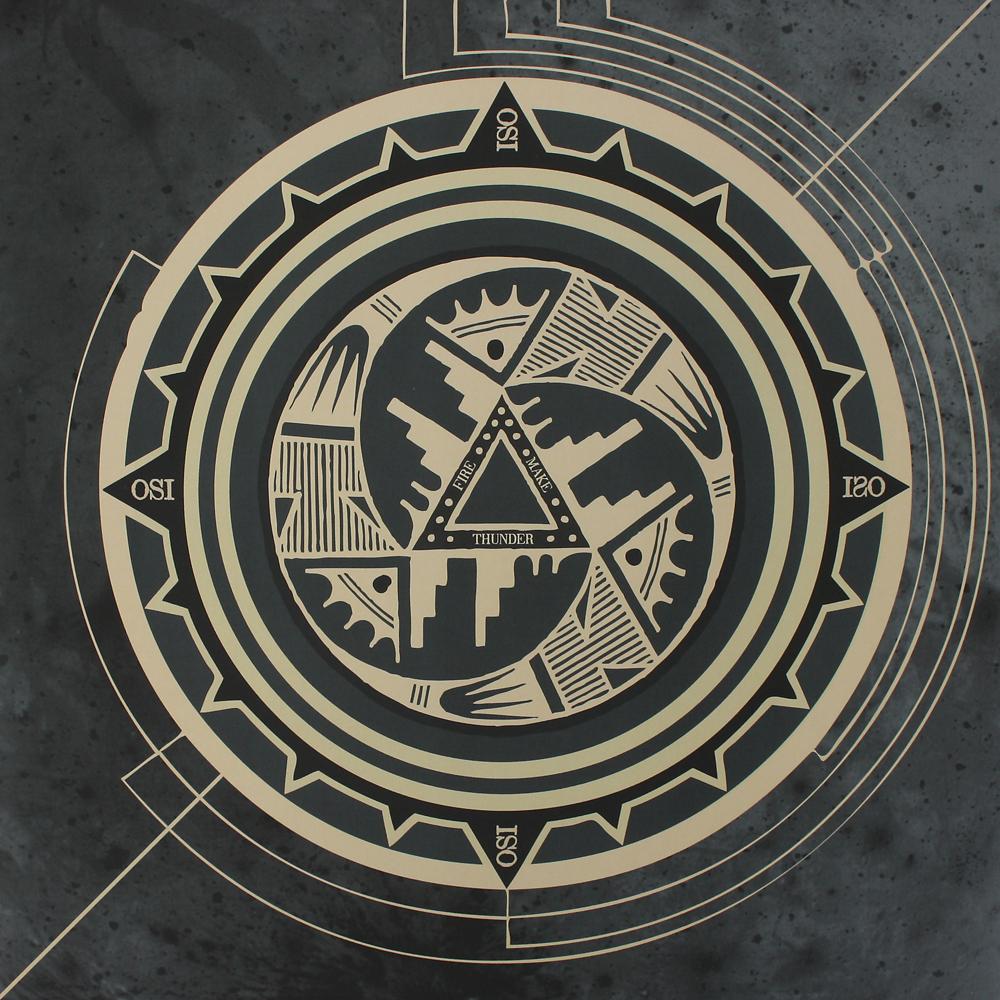
6. OSI: Wind Won't Howl
(Album: Fire Make Thunder)

Now is the time to move to the United States, for the first but not the last time on the list. OSI is the prog metal group originally formed by Fates Warning guitarist Jim Matheos and the original keyboardist of Dream Theater, Kevin Moore, also of Chroma Key fame. On their fourth album Fire Make Thunder, drums are played by Porcupine Tree's Gavin Harrison. Expectations were high following the outstanding previous studio album Blood (2009) but the overall end result turned out to be disappointingly mediocre. Except for this one great song, for which there is no full recording available either in YouTube or Spotify. But you can check out a 35-second sample below: Wind Won't Howl plays between 2:23 and 2:58.


The remaining best five tracks of the top 10 will turn up here tomorrow!

lauantai 29. joulukuuta 2012

Best of 2012, part 1

2012 is coming to an end, so what better time than right now to wrap up its music offerings and create yet another "best of" list which I'm sure the world is not lacking this time of year. While writing this, I am fully aware of the futility of such an effort: there's no way I have even heard all of the year's most significant songs and compositions. I am likely to discover many of them later. So the top 10 that follows cannot really be the final word on 2012 - only a list of the most impressive songs I have heard so far. Yet this is not to belittle the list, or say it has no significance: I have heard some pretty amazing pieces of music this year already.

Sigur Rós: Valtari

Before going any further, let's make one thing absolutely clear. Even though the name of the blog is ProgActive, what follows is not a collection of best progressive rock albums and songs. There are no genre limitations here. All that matters is the quality of the music, not where it may be pigeonholed. Obviously, I do lean considerably towards prog in my preferences, but am not limited only there.

Before getting to the songs themselves, a few words about the albums of 2012. Here at ProgActive we don't really celebrate them, although in some exceptional cases they may receive honorable mentions. I firmly believe that the way music is collected and listened to has already permanently changed. The album by a single artist or group is really no longer the defining unit when it comes to a collection of music. A playlist is. Even back in the early 1980's when I first started compiling  "year's best" lists (I think my first was in 1981, topped by The Garden by John Foxx), I was more interested in individual tracks than entire albums. There is even more reason for that now that the availability of digital downloads means that purchasing individual songs is more and more common as opposed to buying entire albums - be they in digital or physical format.

OSI: Fire Make Thunder

In spite of that, if we do have a brief look at 2012 albums next, there is one release that can easily be selected above all others. It is in fact the one and only new album I bought this year: the self-titled album by the American symphonic prog group Echolyn which I already reviewed back in August. It is a slightly uneven piece of work, but an impressive one nonetheless.

Many other album releases that I anxiously waited for in advance turned out to be disappointing. Anastasis, the first studio album by Dead Can Dance in 16 years, is one that comes to mind in particular: high expectations that were met by mediocre results. Anastasis is not bad, and it's certainly better than the group's previous two releases: the completely aimless Into the Labyrinth (1993) or the too ethnic for its own good Spiritchaser (1996), but that's all you can say for its defense. On the Dead Can Dance scale, Anastasis is still well below average.

In much the same way, two groups that had shown promise on their earlier releases, Anathema and OSI let me down with their new albums Weather Systems and Fire Make Thunder, respectively. And an even bigger letdown than these two was All the Wars by The Pineapple Thief, on which I failed to find anything truly interesting whatsoever. Considering the group's earlier masterworks, this came as a definite surprise. Compared to it, even Sounds That Can't Be Made by Marillion seemed satisfying: I expected next to nothing and got exactly what I expected.

Anathema: Weather Systems

Of course, 2012 albums included some pleasant surprises as well. Many better works came from artists that I wasn't paying particular attention to beforehand. For example, a year ago I had already more or less forgotten about the Icelandic group Sigur Rós, whose 2008 album with the unpronounceable title had been such a huge disappointment back when it came out that I didn't even bother to listen to their new album Valtari until several months after its release, only to realise that they had made a really, really impressive return to form.

Another album for which I had low expectations to begin with was the debut album of Storm Corrosion. This was due to Steven Wilson's apparent growing interest towards heavy metal. When he decided to collaborate with Mikael Åkerfeldt of Opeth, I assumed that they would produce some kind of a black prog metal album that would contain a lot of growling vocals and be of little interest to me. As it turned out, I was wrong, and pleasantly surprised. There are no metal riffs at all on Storm Corrosion the album. Instead, it contains some of this year's best musical moments, although it is a noticeably uneven piece of work, just like Echolyn.

One more Swedish artist worth mentioning is the goth / dark ambient group Arcana, whose latest album As Bright as a Thousand Suns was released under my radar, but which I luckily stumbled across a little later and found many good moments contained therein.


Next, we narrow down the scope of the actual top 10 of 2012. As before, I have eliminated really long songs from the list because, at least to me, they seem like an art form of their own. Already in the 1980's, I compiled a separate list for them, drawing the line to 10 minutes. This year, there haven't been too many candidates in the "longer than 10 minutes" category, so it is then Echolyn who dominate that list, with Storm Corrosion a close second.

Echolyn's brilliant Speaking in Lampblack (10 mins. 45 secs.) would be my very first recommendation, closely followed by Island (16 mins. 38 secs.) from the same album. It would be advisable to also check out Storm Corrosion's Ljudet innan (10 mins. 7 secs.) as well as their album's title track (10 mins. 2 secs.). But that's really all the really outstanding long tracks from 2012 I have been able to discover so far.

Following this, we finally move on to the top 10... due to be ready and published right here either tomorrow or, at latest, on Monday, New Year's Eve. Please be sure to come back and check out the finest tracks running under 10 minutes and released during 2012.