lauantai 29. joulukuuta 2012

Best of 2012, part 1

2012 is coming to an end, so what better time than right now to wrap up its music offerings and create yet another "best of" list which I'm sure the world is not lacking this time of year. While writing this, I am fully aware of the futility of such an effort: there's no way I have even heard all of the year's most significant songs and compositions. I am likely to discover many of them later. So the top 10 that follows cannot really be the final word on 2012 - only a list of the most impressive songs I have heard so far. Yet this is not to belittle the list, or say it has no significance: I have heard some pretty amazing pieces of music this year already.

Sigur Rós: Valtari

Before going any further, let's make one thing absolutely clear. Even though the name of the blog is ProgActive, what follows is not a collection of best progressive rock albums and songs. There are no genre limitations here. All that matters is the quality of the music, not where it may be pigeonholed. Obviously, I do lean considerably towards prog in my preferences, but am not limited only there.

Before getting to the songs themselves, a few words about the albums of 2012. Here at ProgActive we don't really celebrate them, although in some exceptional cases they may receive honorable mentions. I firmly believe that the way music is collected and listened to has already permanently changed. The album by a single artist or group is really no longer the defining unit when it comes to a collection of music. A playlist is. Even back in the early 1980's when I first started compiling  "year's best" lists (I think my first was in 1981, topped by The Garden by John Foxx), I was more interested in individual tracks than entire albums. There is even more reason for that now that the availability of digital downloads means that purchasing individual songs is more and more common as opposed to buying entire albums - be they in digital or physical format.
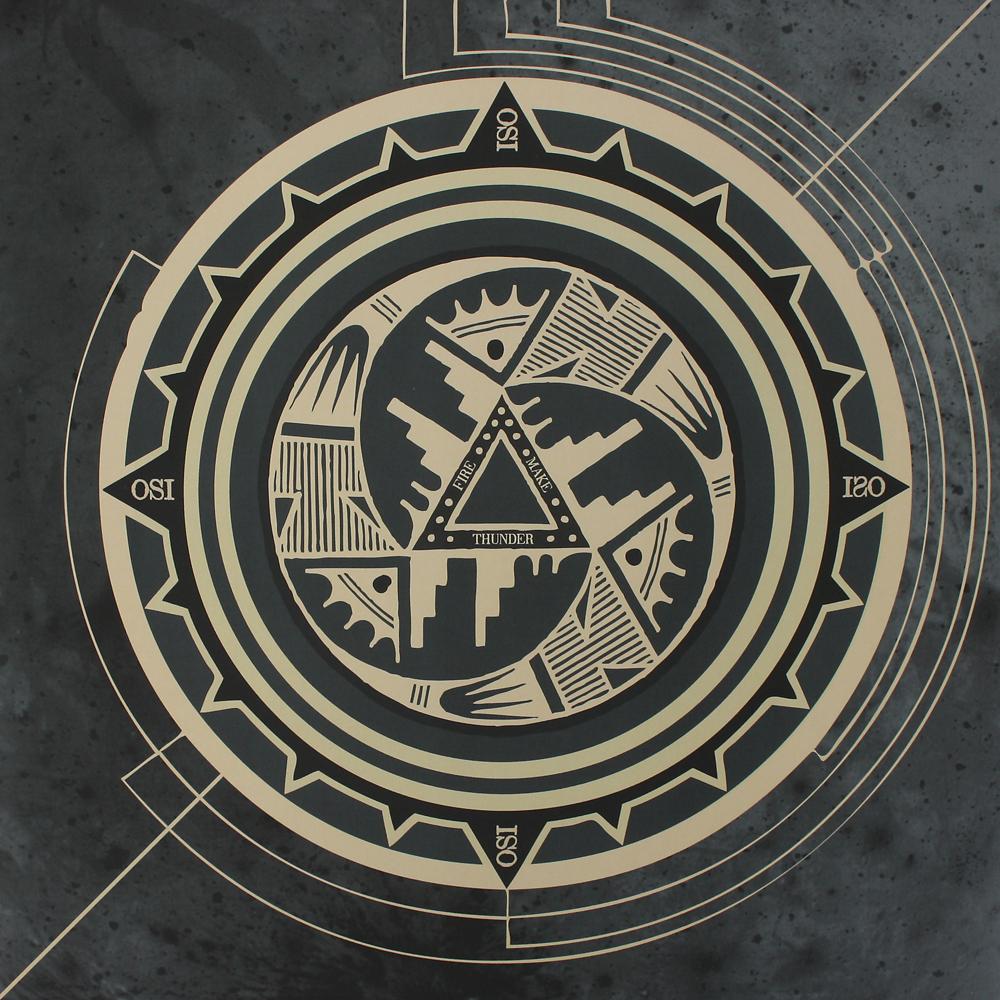
OSI: Fire Make Thunder

In spite of that, if we do have a brief look at 2012 albums next, there is one release that can easily be selected above all others. It is in fact the one and only new album I bought this year: the self-titled album by the American symphonic prog group Echolyn which I already reviewed back in August. It is a slightly uneven piece of work, but an impressive one nonetheless.

Many other album releases that I anxiously waited for in advance turned out to be disappointing. Anastasis, the first studio album by Dead Can Dance in 16 years, is one that comes to mind in particular: high expectations that were met by mediocre results. Anastasis is not bad, and it's certainly better than the group's previous two releases: the completely aimless Into the Labyrinth (1993) or the too ethnic for its own good Spiritchaser (1996), but that's all you can say for its defense. On the Dead Can Dance scale, Anastasis is still well below average.

In much the same way, two groups that had shown promise on their earlier releases, Anathema and OSI let me down with their new albums Weather Systems and Fire Make Thunder, respectively. And an even bigger letdown than these two was All the Wars by The Pineapple Thief, on which I failed to find anything truly interesting whatsoever. Considering the group's earlier masterworks, this came as a definite surprise. Compared to it, even Sounds That Can't Be Made by Marillion seemed satisfying: I expected next to nothing and got exactly what I expected.

Anathema: Weather Systems

Of course, 2012 albums included some pleasant surprises as well. Many better works came from artists that I wasn't paying particular attention to beforehand. For example, a year ago I had already more or less forgotten about the Icelandic group Sigur Rós, whose 2008 album with the unpronounceable title had been such a huge disappointment back when it came out that I didn't even bother to listen to their new album Valtari until several months after its release, only to realise that they had made a really, really impressive return to form.

Another album for which I had low expectations to begin with was the debut album of Storm Corrosion. This was due to Steven Wilson's apparent growing interest towards heavy metal. When he decided to collaborate with Mikael Åkerfeldt of Opeth, I assumed that they would produce some kind of a black prog metal album that would contain a lot of growling vocals and be of little interest to me. As it turned out, I was wrong, and pleasantly surprised. There are no metal riffs at all on Storm Corrosion the album. Instead, it contains some of this year's best musical moments, although it is a noticeably uneven piece of work, just like Echolyn.

One more Swedish artist worth mentioning is the goth / dark ambient group Arcana, whose latest album As Bright as a Thousand Suns was released under my radar, but which I luckily stumbled across a little later and found many good moments contained therein.


Next, we narrow down the scope of the actual top 10 of 2012. As before, I have eliminated really long songs from the list because, at least to me, they seem like an art form of their own. Already in the 1980's, I compiled a separate list for them, drawing the line to 10 minutes. This year, there haven't been too many candidates in the "longer than 10 minutes" category, so it is then Echolyn who dominate that list, with Storm Corrosion a close second.

Echolyn's brilliant Speaking in Lampblack (10 mins. 45 secs.) would be my very first recommendation, closely followed by Island (16 mins. 38 secs.) from the same album. It would be advisable to also check out Storm Corrosion's Ljudet innan (10 mins. 7 secs.) as well as their album's title track (10 mins. 2 secs.). But that's really all the really outstanding long tracks from 2012 I have been able to discover so far.

Following this, we finally move on to the top 10... due to be ready and published right here either tomorrow or, at latest, on Monday, New Year's Eve. Please be sure to come back and check out the finest tracks running under 10 minutes and released during 2012.

lauantai 13. lokakuuta 2012

Strong recommendation: What Have We Sown? (song) by THE PINEAPPLE THIEF

Album: What We Have Sown
Year: 2007
Country: United Kingdom
Running time: 27 mins. 23 secs.
Spotify link
YouTube link


Back in June, when I was compiling the Top 20 Long Prog Masterpieces list, there was one song in particular that I had a problem with classifying. The song in question was Remember Us (2003), by the British indie rock / prog group The Pineapple Thief. I have already mentioned it earlier, when writing about the album whose closing track it is: Variations on a Dream.

Remember Us is a beautiful, long, even touching song that refers to the 9/11 terrorist attacks. But is it really prog? I wasn't sure of that, so it was very easy to drop it out of the top 20 and think of it as #21. More recently, I have come across another song by the same group that might be close to that same rank: a long prog masterpiece, absolutely, but not quite worthy of the top 20.

The Pineapple Thief's 2007 album What We Have Sown is one of those recordings that I have somehow overlooked for a long time. Once again, thanks go to Spotify. It was only about one month ago that I noticed this album listed there and checked it out. It didn't take long to realise that What We Have Sown is overall one of the group's better efforts.

On top of that, it didn't take long to notice what was easily the most essential track on the album. What Have We Sown? is a long, challenging, constantly evolving song that runs for nearly half an hour. And what a rewarding half hour it is! This is prog at its best: creative, challenging, and unforgiving. What Have We Sown? offers neither an easy entrance nor an effortless way out. This is not a background musical piece. It requires you to really concentrate.

There are prolonged instrumental passages that have an ominous feel to them. The vocal passages are considerably easier on the ear, but they offer only temporary relief. The track opens with individual sounds that are more like sound effects than instrumentals parts of a composition. Overall, the long song fits perfectly the slightly off-kilter, almost supernatural feel of the album cover. It is an example of modern prog art at its very best, and definitely not far outside the Top 20 list of long prog masterpieces of all time.

sunnuntai 9. syyskuuta 2012

Very strong recommendation: And Then There Were Three... (album), by GENESIS

Year: 1978
Country: United Kingdom
Spotify link (Entire remastered album)
YouTube link (Entire album)


And now, the gloves come off. I am now going to write something extremely controversial. When I did this same thing before, I was called an idiot. But yes, nevertheless, in my opinion which is not even particularly humble, the 1978 release And Then There Were Three... is the best album Genesis ever made. So there. This, combined with the opinion that Going for the One (1977) is the best Yes album ever, resulted in said insult.

This may not be a very popular opinion among prog fans, and some of them can be, shall we say, slightly fanatic about the correct order of things. But hey, come on, what is the alternative? To call the excruciatingly boring Selling England by the Pound (1973) the pinnacle of the group's output? Like they used to do here, although it has now gone down to third place over there?

Let's discuss And Then There Were Three... and do it properly. At the time, everyone remembered well enough the immensely disappointing departure of Peter Gabriel. He decided not to continue with Genesis in 1975, in the middle of The Lamb Lies Down on Broadway tour. And leave he did, upon its completion. As a result of that shock, Genesis spent some time looking for a new lead singer, until they finally decided that Phil Collins was the right choice.

The band continued their recording career. First came the extremely enjoyable A Trick of the Tail, then the slightly weaker but still fully satisfactory Wind and Wuthering (both 1976). It seemed like everything was going to be all right after all. And this is when the bomb dropped. The lead guitarist Steve Hackett decided to leave Genesis as well. And then there were three...

I don't really have a concrete idea what the mood among the remaining three members of Genesis was in the aftermath of Hackett's decision. But it must have been hard. First, the key member and unquestionable leader of the group decides to leave. Then, another member does the same. It must have looked like there was no future for the group.

It is this desperation that must have given Genesis exactly the right frame of mind to write this unbelievable set of songs that they have never surpassed. At this point, it seems that the keyboardist Tony Banks had to assume the leader role within the group, which certainly affected the end result: And Then There Were Three... is a keyboard driven symphonic prog album in much the same way as Danger Money by U.K. was driven by Eddie Jobson's keyboards one year later.

This setup is particularly emphasized by one of the greatest opening tracks ever, Down and Out, where it is Banks's keyboards that drive the track forward and make it memorable along with its extremely peculiar time signature which is more than enough to remind the listener that this is a genuine progressive rock album.

Masterpiece after masterpiece keeps coming. Snowbound is easily the greatest song Mike Rutherford ever composed. Burning Rope is one of the best symphonic prog songs of the decade, along with Down and Out. Possibly The Lady Lies is the only song that outdoes them both, even though at its climax it ashamedly rips off Tony Kaye's piano sequence in A Venture (1971) by Yes. Even the mandatory single hit, very commercial Follow You Follow Me is a genuinely beautiful song that you can't help liking even though it has nothing to do with prog.

The only two tracks that can be considered less than masterful are Ballad of Big, a western story that, while it is a perfectly fine song, fails to really impress; and more importantly, Scenes from a Night's Dream. The only humorous track on the album is its only true failure. Like so many times before, whenever Genesis tries to be funny, they suck. See also Robbery, Assault and Battery; The Return of Giant Hogweed; Lurker etc.

I bought And Then There Were Three... in September 1979, and after repeated listenings, came to the conclusion that it was the best album I had ever heard. This is something I no longer agree with. In hindsight, I think Going for the One by Yes is even better. These two albums from the late 1970's represent everything that I value in music. Both have strong keyboardists and are very melody driven yet not in a straightforward way.

These are the top two albums I can think of. It is therefore all the more surprising that the third album in my personal all time top three was made in the 2000's. I guess I should write about that one next.

For Genesis, this masterful period turned out to be short-lived. Tony Banks handed over the group leading duties to Phil Collins, and we all know how that turned out. Genesis quickly transformed into a meaningless pop group in the vein of Collins' highly successful solo album Face Value (1981). As a result, they wrote one or two pretty good tracks even in the early 1980's but the masterful phase that both began and ended with And Then There Were Three... was forever lost.

By the time Invisible Touch (1986) came out, a genuine music fan no longer knew whether to laugh or cry. Whatever remains of musical genius was left, Collins drove to the ground with his weepy and whiny pop songs that would have better suited someone like Celine Dion to interpret. It is therefore all the more satisfying to think that, before all this happened, the group had a moment of uncertainty and produced at least one masterpiece, before succcumbing to blatant commercialism.

tiistai 28. elokuuta 2012

Review: Echolyn (album), by ECHOLYN

Echolyn: Echolyn
USA 2012
Release date: 9 July
Ray Weston - lead and backing vocals
Brett Kull - guitars, lead and backing vocals
Tom Hyatt - bass, backing vocals
Paul Ramsey - drums, percussion, backing vocals
Christopher Buzby - keyboards, backing vocals

1. Island (YouTube link)
2. Headright
3. Locust to Bethlehem
4. Some Memorial
5. Past Gravity (YouTube link)
6. When Sunday Spills
7. Speaking in Lampblack (YouTube link)
8. The Cardinal and I


Pennsylvania's pride Echolyn is generally labeled as a representant of symphonic progressive rock, which is the most common and easily accessible subgenre of prog. Much like before, on their new album they frequently border on regular mellow rock, not sounding much like prog at all. The more challenging sequences, on the other hand, become all the more surprising for this very reason. Echolyn is really not an easy album to access; it is only very good at giving such a false impression.

The group's previous release The End is Beautiful (2005) is already seven years in the past - a longer period of silence, recording-wise, than what was experienced when they broke up in the aftermath of As the World (1995) only to regroup for Cowboy Poems Free (2000). The long period of perfecting new material can be heard: overall, the new album is an improvement on its predecessor.

In comparison with the hard rock influences of The End is Beautiful, the new album gives an impression of serenity, calm and effortlessness. The previous album definitely had its moments as well, but the more mellow soundscape of Echolyn is not only easier on the ear, but also more melody driven.

The real centerpiece of the entire album is its opening track, Island. A brave choice, considering that a potential album buyer might be turned off by it. Island runs nearly 17 minutes and even though it begins with easy enough rock riffs, it soon delves deep into prog territory that might be a turn off for some potential album buyers. Even I wasn't too crazy about the song to begin with, until a few listenings later. Eventually I learned to appreciate the track which clearly is among the very best of the group's output.

The second track Headright is way easier, and also much shorter. In terms of form it is a much more traditional rock song. This also applies to the following track, the infinitely beautiful Locust to Bethlehem, which proves the maturity of Echolyn and I think it might just be my personal number one favourite on the entire album. This is admittedly a close call with track number 7.

Until now, we have been doing really, really well. But following the first three tracks, there is an additional three that, while still pretty good, are nowhere near as convincing. This is not to say that they are not worthy of the group or this album, but to me, they sound like weaker efforts than the previous three. The mellow, easygoing feeling persists but composition-wise, we seem to descend to only average instead of good or great.

The seventh track that saves the day, is the stunning Speaking in Lampblack, my second nominee for the best track on the album. Consisting of several, distinctly different movements that are linked together and running nearly 11 minutes, we are now again in melodic rock territory: easy to access, with only very minor prog influences.

And speaking of those, they make a magnificient return on track 8 which is the closing track of the double album. To begin with, I totally dismissed The Cardinal and I as a somewhat failed experiment of some kind. Hardly a discernible melody and little else of any interest. Boy, was I proven wrong upon repeated listenings! Now, the closing track is one of my definite favourites on the album: a real stress test for anyone's capability to stand progressive rock.


Echolyn shares the same title as the group's debut, released in 1991. This is a somewhat peculiar choice of title, as it is guaranteed to cause confusion between the two recordings. Already, iTunes informs us that the release year of this new album is 1991, and similar mixups will certainly reoccur.

Another strange choice is the decision to release Echolyn as a double album. The first four tracks have been stored on Disc 1 and the remaining four on Disc 2. This wouldn't be strange in itself, had those two separate discs been recorded nearly full. But no, they are both half empty. The entire combined running time of the eight tracks is just under 71 minutes which means that they would have been easy to fit on a single disc.

The double album status of course has its effect on pricing. The iTunes download alone costs a whopping 17,99 euros in the eurozone, and if you want to buy physical discs that will cost you well over 20 euros, depending on where you make the purchase. This is not very nice. Just look at Dream Theater, many of their albums are about as long but have been released on a single disc and priced accordingly.

Time for closing statements. While the new album's peaks are not as high as some of their previous albums', Echolyn is nonetheless an outstanding effort and what's best about it is its even quality. At best, Echolyn is great and even at its worst, pretty good. The quality "valley" that consists of tracks four through six is not a deep gorge that you want to jump across as soon as you can.

Considering all this, it is my humble opinion that overall, Echolyn is the second best album Echolyn has ever made. Sure, the peaks of As the World are way higher than anything presented here, but that album also contained several really weak tracks that you really do want to jump across. Echolyn has no such failures. It is like a Formula 1 driver that reaches the second place in the championships without winning a single race. It is one of those rare albums that has no really weak tracks. Only the second time for Echolyn.

Yes, that is correct. A decade ago Echolyn already released one album that also didn't contain a single weak track. In fact, it contained only one track. While the new Echolyn is a really, really good album it naturally pales in comparison with Mei (2002) whose title track is the eighth greatest Long Prog Masterpiece of all time. That is the album that the group will hopefully be remembered for, in the decades to come. Get your hands on both, and you have the best possible introduction to this excellent prog group who will hopefully release many, many more albums. I certainly hope we don't have to wait another seven years for the next one.

sunnuntai 19. elokuuta 2012

Strong recommendation: Variations on a Dream (album), by THE PINEAPPLE THIEF

Year: 2003
Country: United Kingdom
Spotify link (Entire album, 2011 remastered edition)
YouTube link (We Subside)
YouTube link (Vapour Trails)
YouTube link (Resident Alien)
YouTube link (Remember Us)


Variations on a Dream, by the British prog group The Pineapple Thief, can be considered a cult classic. The group was formed at the end of the 1990's and had at this point released two previous albums: Abducting the Unicorn (1999) and 137 (2001). It wasn't until their third album that they made their real breakthrough, and deservedly so.

Were the entire album as exceptionally great as its standout tracks We Subside, Vapour Trails, Resident Alien and Remember Us, it would easily have earned the honour of ProgActive's Very Strong Recommendation. But, even as it is, any album that contains four masterpieces clocking well over half an hour, is most definitely worth checking out even though the rest of the album varies only between very good and satisfactory. The album may contain ten tracks in total, but it is these four that use well over half of its running time.

Since their formation, The Pineapple Thief has really been one man's band. The founder, Bruce Soord has always been the unquestionable artistic leader. Under his direction, the group has until now released a further five albums: 10 Stories Down (2005), Little Man (2006), What We Have Sown (2007), Tightly Unwound (2008) and Someone Here is Missing (2010). Right now, we are less than three weeks away from the release of The Pineapple Thief's ninth studio album All the Wars.

While most of the recent albums have shown exceptional quality here and there, the group has never truly surpassed their third outing. The opening track of Variations on a Dream, We Subside, is one of the greatest masterpieces of the 21st century and is also a definite fan favourite. I must say that I don't really appreciate the silly lyrics but the music is unbelievable. At the beginning, The Pineapple Thief sounds like a classical music ensemble and while a guitar rock instumentation is added later on, we end the track as it began: as something that might have been composed by Bach or Beethoven.

In much the same way, the album's third track Vapour Trails suffers from almost meaningless lyrics but displays another version of the group's masterful sound. The beautiful melody is this time played with regular, acoustic guitar driven instumentation, with no classical music influences present. The sixth track, Resident Alien, is a beautiful instumental that once again employs string arrangements.

The original release contained only ten tracks and also had a different cover artwork from last year's remastered edition, pictured above. This is how the original release looked like:


The album's closing track Remember Us is the other undying masterpiece on it, in addition to We Subside. Clocking over 16 minutes, this magnum opus is associated with 9/11 for reasons I am not aware of. Yes, sure, the album was released two years after the terrorist attack that brought down the WTC in New York, and its tone is sad, sombre even, so I guess it may be a 9/11 song even though that isn't really mentioned in its lyrics. Here they are in their entirety:

I know everything
We say no

But it doesn't mean a thing
Follow everything
But we know
It doesn't mean a thing.
Come on, it's over
Remember us when we're gone
It's over, for sure

And that's it for a 16-minute song. I see no reference to one particular terrorist attack, but be that as it may, it certainly works as a sort of a requiem to its victims. The mood is extremely sad and the melody is incredibly beautiful. Variations on a Dream may end to a very sorrowful note, but is nonetheless one of the very best albums released during the new century.

torstai 9. elokuuta 2012

Strong recommendation: Ibby it is (instrumental), by HAPPY THE MAN

Album: Crafty Hands
Year: 1978
Country: USA
Running time: 7 mins. 50 secs.
YouTube link


Happy the Man is an American prog band formed in Harrisonburg, Virginia, in 1973. Their self-titled debut (1977) is considered one of the essential American prog albums of the 1970's and I definitely must agree, although Happy the Man the album is noticeably uneven. Great at its best, slightly embarrassing at its worst. Even so, overall, it is the group's best work.

Only one year later, Happy the Man released their sophomore effort Crafty Hands, which had absolutely no commercial impact and led to the dissolution of their recording contract. And, one must admit, it is a weaker effort than its predecessor. It starts out quite well, then slowly dwindles into mediocrity. At the very beginning, there are a couple of pretty good tracks. Then there is track number 3 which is an unbelievable masterpiece. After that, the only remaining decent track seems to be the only non-instrumental one, Wind Up Doll Day Wind.

The masterpiece in question is the nearly 8-minute instrumental track called Ibby it is, simply phenomenal both as a composition and an achievement in skillful use of musical instruments. It is one of the best examples of one simple truth that I am aware of. While progressive rock may be perceived as something truly serious and joyless by the general public, it is in fact the most fun musical genre there is. You simply cannot listen to the impeccable skill and fun the guys have playing this track, without a wide grin on your face. Prog equals FUN! Oh, yes.

Happy the Man's peculiar name probably originates from a relatively unknown Genesis song from the Peter Gabriel era - unknown due to the fact that it was never included on any of their albums. This seems quite fitting, as the group's sound is not very American. Instead, they sound a lot like the British symphonic prog groups of the era.

Gabriel played an important role in helping Happy the Man get a recording contract in the first place, albeit inadvertently. He personally met them in the summer of 1976, following his departure from Genesis, while looking for new musicians to be his new "band". Eventually, he decided against them, but it was this encounter that led to sufficient attention towards Happy the Man that they were able to sign a recording deal with Arista, and release their first two albums.

Following Crafty Hands, Happy the Man released only a couple of collections of their early recordings which sound more like rehearsals than proper studio albums (the 37-minute epic Death's Crown is an obvious standout), until 2004 when their third real studio album was finally released. The Muse Awakens contains mostly instrumental music, which seemed to be their strong suit also earlier on.

The main reason for the group's instrumentals always sounding better than their songs is that they never had a strong vocalist. One of the original members Stanley Whitaker handled the singing duties in addition to playing guitars, but was never really much of a singer. Although he could certainly carry a tune, most of the time he sounded really unsure of himself, almost apologetic. During particularly emotional passages he even tended to pipe a falsetto vibrato that may or may not have been fully intentional.

Ibby it is doesn't suffer from uncertain vocal work. It is an exceptionally well played symphonic prog instrumental that employs eccentric time signatures. When it really gets going, it gives you an impression of getting airborne and circling you with its complicated melodies that move and change shape rapidly. The group is working at the peak of their creativity, most of which went into their debut album, but some luckily still remained and gave us this undying masterpiece.

torstai 2. elokuuta 2012

Strong recommendation: The Seven Dreams (album), by GOLDBUG

Year: 2010
Country: USA / United Kingdom
Spotify link


After having flirted with the mainstream for a short while, we are now back deep, extremely deep in progressive rock territory. I was unable to find Goldbug in YouTube and was actually rather surprised to find them in Spotify - hence the link above. Their first release The Seven Dreams from a couple of years ago remains a stunning and challenging masterpiece that really requires you to concentrate on listening instead of simply hearing.

Influenced by jazz and avant garde as well as prog, and obviously improvised for a considerable part, The Seven Dreams is the result of a collaboration between veterans of said genres. Arguably the best known of the group members is flutist and saxophonist Theo Travis, a former member of Gong and Soft Machine who has also worked with Robert Fripp of King Crimson fame. Another connection to King Crimson comes via drummer Eric Slick, a member of the Adrian Belew Power Trio, Belew obviously formerly known as the second guitarist of King Crimson since the early 1980's.

Together with bassist Barry Meehan and guitarist Tim Motzer, who, in his past, has collaborated with former Can drummer Jaki Liebezeit (sorry about the deluge of references here), they have created a truly astounding album that really begs for some sort of a continuation. I have no idea if Goldbug is going to continue to record following this initial offering, but would be truly excited about such a prospect.

On this album, the two longest tracks are arguably the least interesting, although far from mundane. The 11-minute-plus works Scratching the Third Eye and The Past is Still Present sound slightly underdeveloped in relation to their running time. Mind you, this is a very, very minor complaint: they are outstanding pieces of music but do not quite match the rest of the album which is nothing short of flawless.

The Seven Dreams is easily one of the most significant prog albums of the 2010's. It is not very easy to access, but extremely rewarding for listeners with patience and an endless desire to experiment, discover, and readiness to expand the boundaries of their musical taste.